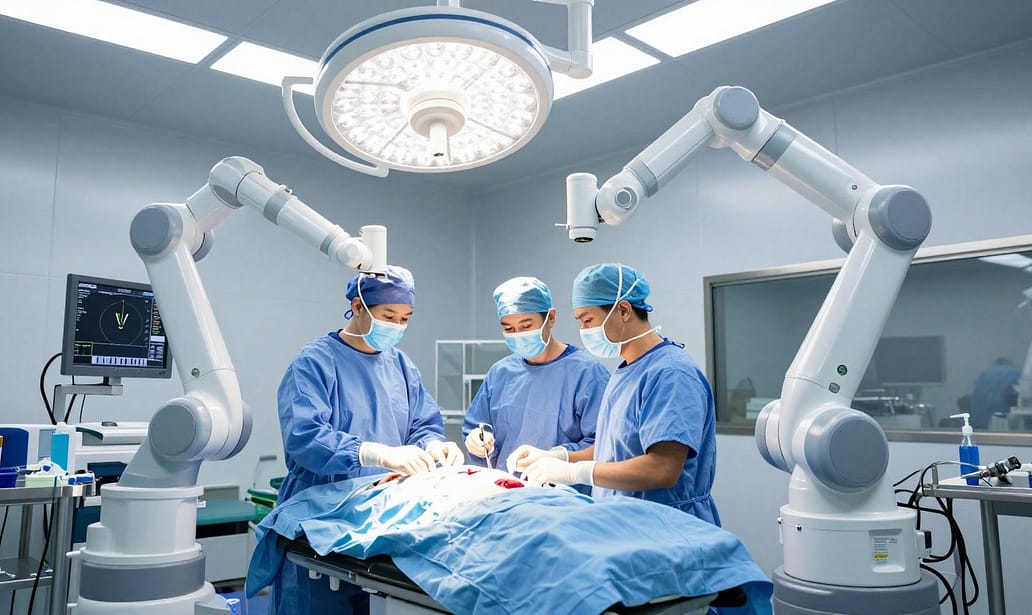
The field of medical treatment for obesity is undergoing a significant shift. A new, high-tech method is transforming how doctors help patients achieve major weight loss.
This innovative approach utilizes advanced robotic systems. The most well-known is the da Vinci Surgical System. It acts as a powerful tool for the surgical team, providing enhanced vision and control.
The process is minimally invasive. Instead of one large opening, surgeons make a few tiny incisions. This leads to less trauma for the patient’s body.
Major hospitals across the U.S., including Mercy Health and NewYork-Presbyterian, now offer this option. They recognize its potential for greater precision and better outcomes.
For individuals struggling with severe obesity, this represents a promising path forward. It combines modern technology with proven surgical techniques to improve health.
This article will explore what this procedure entails. We’ll cover how it’s performed, who is a candidate, and its key benefits. For detailed information on this advanced procedure, visit our comprehensive guide on robotic bariatric surgery.
What is Robotic Bariatric Surgery?
This approach uses a sophisticated platform to perform operations through tiny openings in the abdominal wall. It is a form of weight loss treatment where a surgeon guides a computer-assisted machine.
The goal is to modify the digestive system to help people achieve major health improvements. This technique offers a modern alternative to older methods.
The da Vinci Robotic Surgical System
The da Vinci platform is the most well-known tool for this type of intervention. It consists of three main parts.
A surgeon’s console is where the doctor sits and controls the instruments. A patient-side cart holds several mechanical arms.
A high-definition 3D vision system provides an exceptional view inside the body.
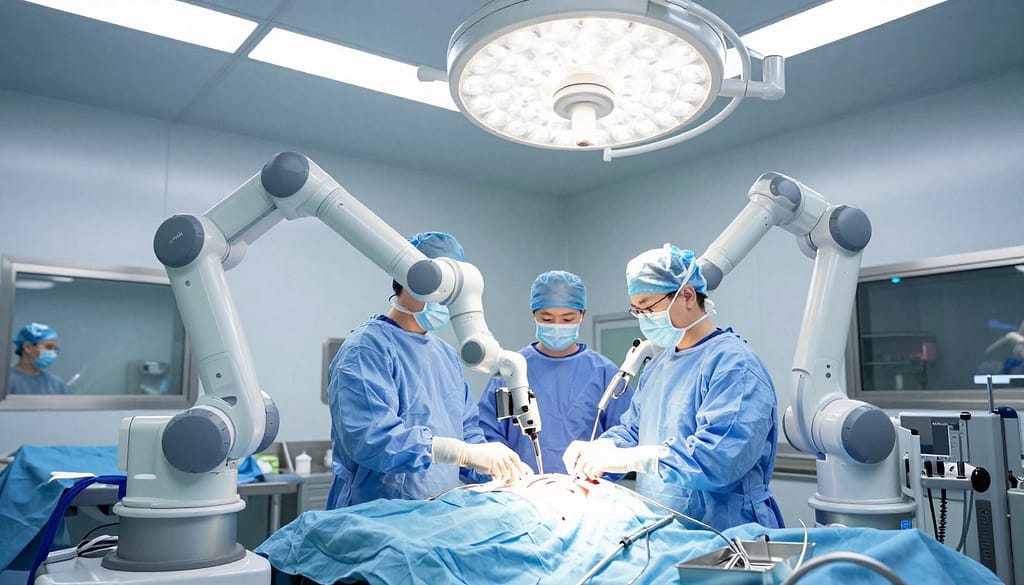
The system translates the doctor’s hand motions into very precise micro-movements. It filters out any natural hand tremors.
This allows for incredible control and stability during the operation. The surgeon remains in full command of every action.
Minimally Invasive Approach with Small Incisions
Instead of making one large cut, the doctor creates several small openings. Each is typically less than one inch long.
The robotic arms and a tiny camera are inserted through these ports. This method is known as a minimally invasive technique.
It causes far less trauma to the body’s tissues. Patients often experience reduced pain after the procedure.
Scarring is minimized because the incisions are so small. There is also less blood loss and a lower chance of infection.
The 3D camera gives a magnified, crystal-clear view of the surgical area. This enhanced visualization helps the surgeon see details better.
The tools have a greater range of motion than standard laparoscopic instruments. They can twist and turn in ways human wrists cannot.
| Feature | Traditional Open Surgery | Standard Laparoscopy | Robotic-Assisted Surgery |
|---|---|---|---|
| Incision Size | One large incision (6-12 inches) | Several small incisions (0.5-1 inch) | Several very small incisions (0.5-1 inch) |
| Surgeon’s View | Direct, no magnification | 2D screen with 2x magnification | 3D high-definition view with 4-10x magnification |
| Instrument Dexterity | Full hand movement | Limited by rigid tool design | Enhanced, wrist-like movement & tremor filtering |
| Typical Pain Level | Higher | Moderate | Lower |
| Recovery Time | Longer (6-8 weeks) | Shorter (3-5 weeks) | Often shortest (2-4 weeks) |
| Scarring | Significant | Minimal | Minimal |
Leading medical centers, like Mercy Health, serve as national training hubs. They teach doctors across the country how to use this advanced technology.
For a closer look at how this is applied, explore details on minimally invasive robotic weight loss surgery at major institutions.
This evolution in care combines top-tier tech with medical skill. It aims to provide safer and more effective outcomes for individuals.
How Robotic Bariatric Surgery is Performed
The journey towards significant weight reduction through this advanced method begins long before the operating room. It is a carefully planned process that blends human expertise with technological precision.
This section breaks down the key stages, from initial preparation to the final steps of the operation.
Step-by-Step Surgical Procedure
Patients undergo a thorough evaluation before the day of the operation. This includes medical clearance and specific dietary guidelines to prepare the body.
On the day of the procedure, the patient is placed under general anesthesia. The surgical team then positions the da Vinci system’s patient-side cart near the operating table.
The doctor makes a few very small incisions in the abdomen. These openings allow for the insertion of trocars, which act as ports.
Through these ports, the platform’s arms are positioned. One arm holds a high-definition 3D camera.
The other arms hold specialized surgical instruments. These include graspers, scissors, and staplers needed for the operation.
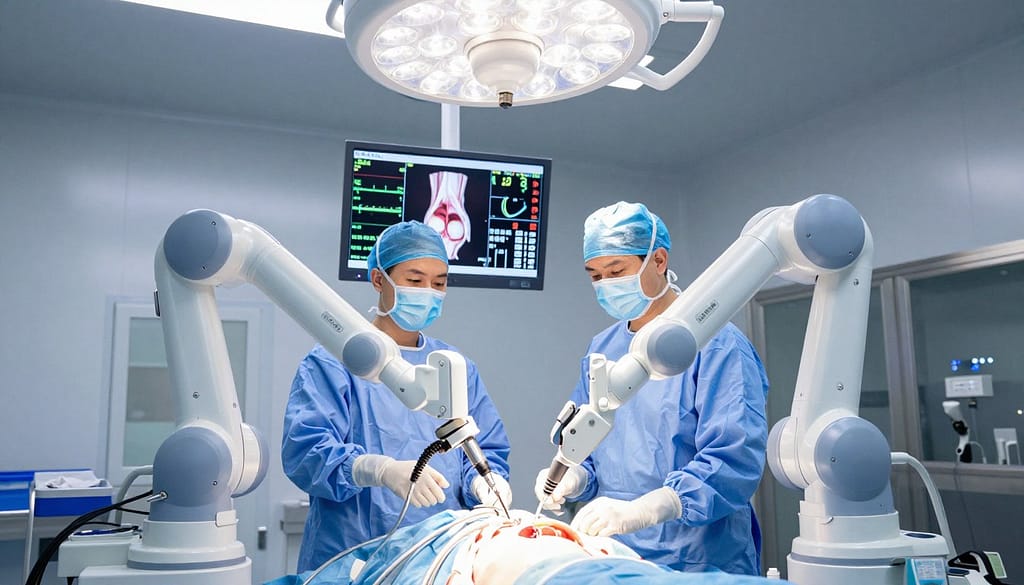
Surgeon Control at the Console and Enhanced Visualization
The surgeon sits at a console away from the patient. Looking into a viewer, they see a stereoscopic 3D image of the surgical site.
This provides true depth perception. It feels like being inside the patient’s abdomen.
Using hand controls and foot pedals, the surgeon’s movements are translated in real-time. The system scales motion, so large hand movements become tiny, precise movements inside the body.
It also filters out any natural hand tremors. This allows for exceptional steadiness during delicate tasks.
The 3D camera offers magnified views up to ten times. This enhanced visualization lets the surgeon identify critical structures like blood vessels and nerves clearly.
For a gastric bypass, the tools are used to staple and divide the stomach. They create a small pouch and reconnect the intestines.
In a sleeve gastrectomy, the instruments carefully remove a large portion of the stomach. This leaves a slender sleeve-shaped pouch for food.
The steadiness of the system allows for precise suturing and stapling. This precision can improve incision closure and may reduce complication rates.
After completing the procedure, the surgeon removes the robotic arms. The small incisions are closed, and the patient is taken to recovery.
| Aspect | Traditional Laparoscopic View | Robotic-Assisted Visualization & Control |
|---|---|---|
| Image Type | 2D flat screen | 3D high-definition with depth perception |
| Magnification | Typically 2x | 4x to 10x magnification |
| Surgeon Position | Standing at patient’s side | Seated comfortably at ergonomic console |
| Instrument Movement | Limited by rigid shaft design | Enhanced, wrist-like dexterity with 7 degrees of freedom |
| Motion Scaling | Not available | Surgeon’s large movements scaled down to micro-movements |
| Tremor Reduction | None | Built-in filtration eliminates hand tremors |
Using the da Vinci platform transforms the surgical environment. It provides the doctor with superior visualization and control for complex weight loss procedures.
This technological approach supports the goal of a safer, more effective operation with the potential for a smoother recovery at home.
Candidates, Benefits, and Risks of Robotic Bariatric Surgery
Eligibility for this modern surgical option combines measurements of body size and existing health conditions. This part of the guide examines who is an ideal candidate, what advantages to expect, and the important considerations for a safe journey.
It provides a balanced view of the entire process. Understanding these factors helps individuals make informed decisions with their medical team.
Who is a Candidate for Robotic Weight Loss Surgery?
Doctors use specific guidelines to determine if this advanced method is right for someone. The primary factor is Body Mass Index, or BMI.
A BMI of 40 or higher typically qualifies a person. A BMI between 35 and 39.9 may also qualify if serious health issues are present.
These issues include type 2 diabetes, high blood pressure, or severe sleep apnea. This procedure can be a powerful tool for improving these conditions.
This high-tech approach is often recommended for individuals who are very morbidly obese. It is also helpful for those who have had prior abdominal operations.
Scar tissue from old surgeries can make anatomy complex. The enhanced view and precise control help the doctor navigate these areas safely.
Potential Benefits: Quicker Recovery, Less Pain, and Fewer Complications
This technique offers several distinct advantages over traditional methods. Many people experience a significantly quicker recovery.
They can often return to normal activities and work sooner. Post-operative pain and discomfort are usually much lower.
This is due to the minimally invasive nature of the operation. The use of very small incisions leads to minimal scarring.
The risk of certain problems is also reduced. These include wound infections, bleeding, and gastrointestinal leaks.
Hospital stays are often shorter, sometimes just one or two days. The precision of the stapling and suturing may lower the chance of needing a follow-up operation.
Understanding the Risks and Complications
As with any major medical intervention, there are potential risks to understand. An anastomotic leak is a rare but serious complication.
This is a leak from where the bowel is reconnected. Other risks include dehydration and nutritional deficiencies.
Patients will need to take vitamin and mineral supplements for life. A condition called dumping syndrome can occur.
It happens when food moves too quickly from the stomach into the small intestine. This can cause nausea, sweating, and diarrhea.
Blood clots and reactions to anesthesia are general risks of any operation. A thorough discussion with the surgeon is vital to understand these points.
| Recovery Phase | Timeframe | Key Activities & Diet | Important Notes |
|---|---|---|---|
| Hospital Stay | 1-2 Days | Close monitoring, walking, clear liquids | Pain is managed; team checks for immediate issues. |
| Initial Rest at Home | Weeks 1-3 | Full rest, no heavy lifting. Diet progresses from liquids to pureed foods. | Critical healing period. Follow doctor’s calorie and protein guidelines exactly. |
| Return to Activity | Weeks 4-6 | Gradual return to work and light exercise. Introduction of soft foods. | Strenuous activity and lifting are still restricted. |
| Long-Term Maintenance | 6+ Months | Regular solid meals, consistent exercise program. | Follow-up appointments with the bariatric team are essential for tracking health. |
Recovery Process and Keys to Long-Term Success
The healing journey begins right after the procedure. Most people need a dedicated rest period of two to three weeks at home.
Following the dietary plan is non-negotiable for success. It starts with liquids, moves to purees, and then to soft foods over several weeks.
Long-term success depends on permanent lifestyle changes. Eating three balanced meals per day without snacking is a core rule.
At each meal, eat protein first, like chicken or fish. This helps with feeling full and protects muscle mass.
Drink at least 64 ounces of water daily, but not during meals. Avoid sugary drinks and high-fat foods.
Regular physical activity, about 150 minutes per week, is crucial. Ongoing support from a full team makes a big difference.
This team includes the surgeon, a dietitian, and often a psychologist. They provide the information and encouragement needed to maintain weight loss.
It’s worth noting that this precise method may take slightly longer in the operating room. For very ill patients needing a faster operation, this is a factor the doctor will consider.
Conclusion
Looking ahead, the evolution of medical tech promises to refine how we approach severe obesity. This minimally invasive method enhances precision for better health outcomes.
Platforms like the da Vinci system give surgeons superior control. This leads to less pain and a quicker recovery for patients.
While all procedures have risks, the benefits make this a valuable option. It is especially helpful for complex cases.
The use of robotic platforms is growing. New innovations will make these systems more advanced and accessible.
Surgeons are now exploring robotic-assisted duodenal switch. This combines a sleeve gastrectomy with an intestinal bypass.
As technology and surgical skill improve, patient results will keep getting better. Long-term success depends on dedicated follow-up care, as detailed in our guide on post-surgery support.
This field offers real hope for sustainable weight loss and a better quality of life.