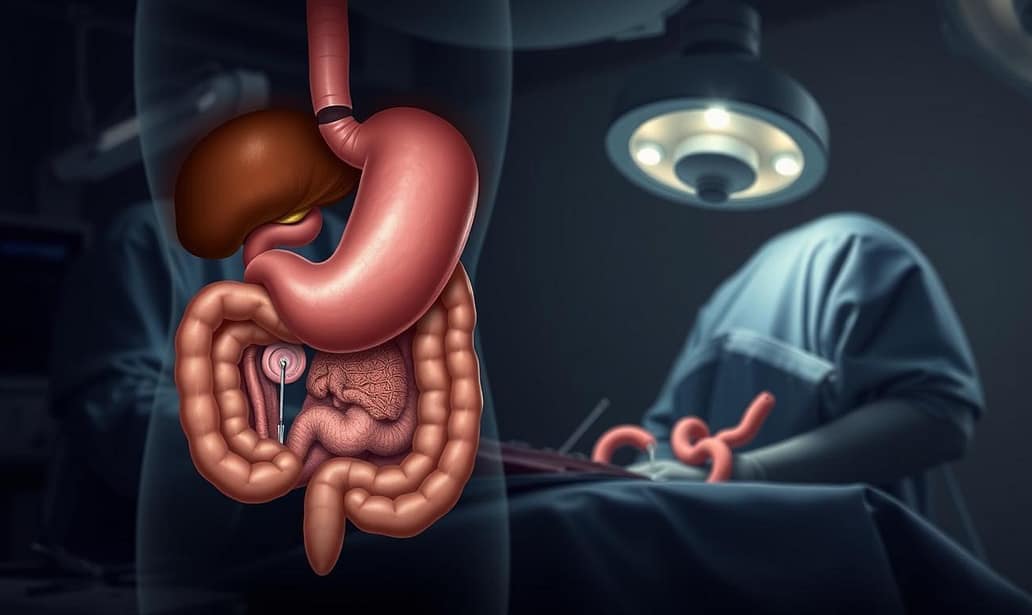
Let’s uncover the truth behind a game-changing surgery. The duodenal switch isn’t magic – it’s advanced science.
Your digestive system is like a disorganized warehouse. The DS reorganizes it, cutting storage space by 75%. It’s like a minimalist’s dream.
Studies show amazing results: 701 patients with an average BMI of 52.8 lost a lot of weight. They shed 127 pounds in a year and kept off 131 pounds at three years. That’s a 69-73% reduction in excess body weight.
Why rely on willpower when we have such effective treatments? The duodenal switch combines two powerful methods. It’s like your body learning to listen better, thanks to surgery.
Indications and Candidacy
Let’s explore the velvet rope that separates those who want to try from those who can have the duodenal switch. It’s not just any weight loss program. It’s like applying for a new identity.
To get in, you need to meet strict criteria. It’s like trying to get into a club where the bouncer is a bariatric surgeon. You need a BMI over 40 or be 100+ pounds over your ideal weight.
The numbers are striking: 58% of people were supermorbidly obese (BMI ≥50), and 22% had BMIs of 60 or more. Men often had even higher numbers, showing they were the champions of metabolic distress.
Why such strict rules? Traditional weight loss methods fail for this group. It’s like trying to lose weight when your metabolism has stopped working.
This weight loss surgery isn’t about looks. It’s a necessity. It helps 12 million Americans who can’t lose weight with other methods. The duodenal switch is a way to reset your metabolism when all else fails.
The process of getting approved shows that sometimes, the most extreme solution is the best one. When your body needs a complete overhaul, small changes won’t do.
Step-by-Step Procedure
Let’s take a closer look at the duodenal switch surgery. It’s not just a simple operation. It’s a detailed makeover of your digestive system, like a Swiss watch or urban renewal.
The first step is called “gastric downsizing.” We make your stomach smaller by 75%, leaving a 100mL tubular stomach. It’s like turning a big hall into a cozy bistro.
Then, we split the duodenum 4cm past the pylorus. This keeps the gate that stops dumping syndrome open. It’s like planning a city’s traffic flow for your digestive system.
Next, we measure the small bowel with umbilical tape. We split it in half, creating two new parts: the alimentary and biliopancreatic limbs.
The real magic happens when we connect these parts. The alimentary limb goes to the duodenum, and the biliopancreatic limb goes 100cm from the ileocecal valve. This is where food and digestive juices meet.
This setup creates a “nutrient express lane.” Food takes a long route, while digestive juices take a shortcut. They meet in the last 100 meters, where absorption is limited.
The surgery also includes removing the gallbladder and creating a feeding jejunostomy. These steps are important to prevent future problems.
Every detail in the duodenal switch is carefully planned. It’s like a master plan for your body’s nutrition system, with precision and purpose.
The whole surgery takes 2-3 hours under general anesthesia. It’s a major change in how your body handles food, a metabolic makeover.
Outcomes & Effectiveness
Let’s talk about the real deal – the DS procedure’s results. The numbers are so impressive, they’re like a grand opera. Patients lose an average of 127 pounds in the first year. That’s like losing an entire high school freshman.
This weight loss isn’t just a flash in the pan. It stays off over time. At three years, patients keep 131 pounds off. And even at five years, they’ve lost 118 pounds.
The numbers get even better. At one year, 69% of excess body weight is lost. This jumps to 73% at three years. And it stays at 66% long-term.
Superobese patients, with BMIs of 50+, also see success. They keep 78.6% of weight off at three years. And 73.3% at five-plus years. This shows the DS procedure works well across all weight categories.
The DS approach is truly magical. Patients eat about 1600 calories a day. They don’t have to give up food they love. They just eat like normal people.
According to recent medical research, the DS procedure changes how the body works. It’s not just about losing weight. It’s about changing how the body uses food and energy.
The DS procedure does what most diets promise but can’t deliver. It leads to lasting change without constant dieting. Patients live their lives with less weight to carry.
Common Risks & Side Effects
Let’s look at the fine print of weight loss surgery. Every surgery has its own risks and benefits. The 1.4% mortality rate means 10 people out of 701, mostly older men with high BMIs, face a big risk.

The list of complications sounds like a thriller. Pulmonary embolisms can stop a heart suddenly. Rhabdomyolysis breaks down muscle tissue. And anastomotic leaks can cause big problems.
But, when you compare these risks to not treating obesity, they seem smaller. It’s like choosing between two risks, one known and one unknown.
5.7% of people need more surgery for malnutrition. It’s like fine-tuning an engine to get it right.
Nonfatal leaks happened in 5 patients, and 21 had big problems. Deaths were due to various reasons, including pulmonary embolus and rhabdomyolysis.
Yes, there are risks with weight loss surgery. But there are also risks in not doing anything. It’s about choosing which risks you prefer to take.
Recovery Process
Welcome to metabolic boot camp, where the tubes outnumber your weekend plans. The duodenal switch recovery isn’t a spa retreat. It’s a program that teaches your body new ways to work, with more wires than a tech conference.
You’ll wake up looking like a cyborg prototype. You’ll have an epidural catheter for pain, and lines tracking your health. You’ll also have a urinary catheter and compression stockings to prevent clots. It’s like becoming one with the monitoring system.
By day three, you’re ready to test your new digestive plumbing. The video swallow study is like a reality TV show for your insides. Nobody wants leaks in their new gut.
Pass the swallow test? You get clear liquids. It’s like getting your learner’s permit for food. Most patients surprise themselves by eating solids and going home by day five. This is faster than most surgeries.
The real work starts after you leave the hospital. Your follow-up schedule is like a report card:
- 3-week and 6-week check-ins
- Quarterly visits for the first year
- Annual surveillance thereafter
These visits are serious. They check your weight, diet, and labs. It’s like NASA’s mission control approving your progress. It’s not just recovery – it’s learning to speak your body’s new language.
The duodenal switch changes how you see food, your body, and yourself. You’re not just healing from surgery. You’re learning to understand your body’s new ways.
Patient Eligibility Q&A
Who qualifies for the duodenal switch? It’s not like getting a credit card. The approval process is much tougher. The DS isn’t for people looking for quick fixes.
Patients face a tough test before surgery. First, they must pass a psychological assessment. Then, they must show they understand weight loss surgery.
The tests before surgery are like NASA’s physicals. You’ll have many tests, like lung and heart checks. Your body gets more scans than a Hollywood star at the Oscars.
Now, let’s look at some hard truths our data shows:
- Male patients face higher statistical risks
- Age increases complication probabilities
- Higher BMI correlates with greater mortality risk
This isn’t about discrimination. It’s about the numbers. We must think if we’re saving lives or risking them.
For those curious about DS eligibility criteria, here’s the truth. Metabolic desperation is key, not just curiosity. The program sorts those who’ve tried everything from those who just want to try.
The DS selection asks: Are you ready for a big change? Your test results and mental readiness show if you’re ready before surgery starts.
Conclusion: Final Thoughts
Where does the duodenal switch fit in the world of weight loss surgery? It’s not a fleeting trend. It’s a lasting choice, like a beloved classic book.
Studies show something amazing: people keep off over 65% of excess weight. They don’t have to deal with dumping syndrome or ulcers. They even have fewer than three bowel movements a day. This isn’t magic – it’s how the body works best. The research confirms the results: lasting change without harming your body.
The duodenal switch is like a special team in the fight against obesity. It’s smart, focused, and very effective. It treats your body with care while helping you lose weight. For the right person, it’s more than just weight loss. It’s a new beginning.