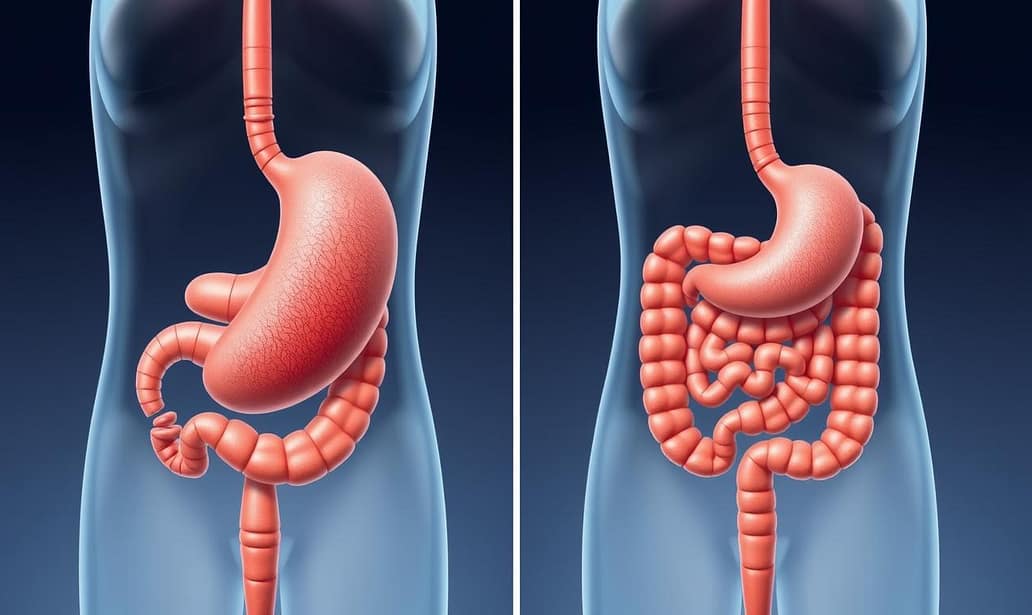
Let’s cut through the fat, shall we? Imagine your stomach as that overly ambitious buffet plate – sometimes you just need a smaller plate.
Welcome to the ultimate showdown: gastric sleeve vs gastric bypass, the heavyweight champions of weight loss surgery. I’ve seen more patients wrestle with this decision than a politician with ethics.
Both procedures offer life-changing results – we’re talking 59-70% excess weight vanishing within 1-2 years. But here’s the intellectual appetizer: while both shrink your stomach’s real estate, they do it with different architectural philosophies.
One’s a minimalist renovation (sleeve), the other’s a complete gut job with plumbing reroutes (bypass). The choice isn’t just about numbers; it’s about which surgical approach aligns with your body’s particular drama.
Quick Facts & Differences
Choosing between gastric procedures is like picking a smartphone operating system. Both connect you, but in different ways. The sleeve vs bypass debate is about finding the right fit for your body.
Gastric sleeve surgery is simple. It removes about 80% of your stomach, leaving a banana-shaped pouch. It’s like decluttering your stomach, keeping only what’s essential for digestion.
Gastric bypass is more complex. It creates a small stomach pouch and reroutes your intestines. This approach reduces stomach size and changes how you feel hunger and absorb nutrients.
Recovery times vary. Both surgeries let patients return to light work in 2-4 weeks. But bypass surgery needs more time to recover, like a full system update.
Weight loss results differ. Bypass patients lose 60-80% of excess weight in 12-18 months. Sleeve patients lose 60-70% in the same time, but more steadily.
It’s like choosing between sprinting and marathon running. Both reach the finish line, but at different paces. Bypass offers more weight loss, but sleeve is simpler and safer for digestion.
Risk levels also vary. Bypass has higher risks at first but helps with diabetes better. Sleeve keeps digestion natural but also offers big health benefits.
In the end, the sleeve vs bypass choice depends on your body, goals, and comfort with risks. It’s about finding the best fit for your body’s needs.
Candidacy Comparison
Think of bariatric surgery eligibility like an exclusive nightclub. There’s a velvet rope, and your medical history is the guest list. Not everyone gets past the bouncer, and that bouncer is a complex algorithm of BMI charts and health records.
Both procedures have their entry requirements, but they’re not identical twins. They’re more like siblings with different personalities. One might be the life of the party, while the other prefers meaningful conversations in the corner.
BMI Requirements
The numbers game begins here. For both gastric sleeve and bypass, the magic number is typically:
- BMI of 40 or higher – automatic qualification
- BMI 35-39.9 with weight-related health conditions
But here’s where the plot thickens. Some surgeons might recommend one procedure over another based on how far above that BMI threshold you land. It’s not just about getting in the door – it’s about which room they escort you to once you’re inside.
Health Conditions Considered
This is where gastric bypass becomes the VIP treatment option. While both procedures address obesity, gastric bypass often gets the nod for patients with:
- Severe type 2 diabetes
- Metabolic syndrome
- Significant GERD or acid reflux
- Mobility issues affecting daily function
The scientific community recognizes that gastric bypass offers superior metabolic benefits for certain conditions. It’s like choosing between a sports car and an SUV – both get you there, but one handles specific terrain better.
| Condition | Gastric Sleeve | Gastric Bypass |
|---|---|---|
| Type 2 Diabetes | Good improvement | Excellent resolution |
| GERD/Acid Reflux | May worsen | Typically improves |
| High Blood Pressure | Significant improvement | Significant improvement |
| Sleep Apnea | Good improvement | Excellent improvement |
This isn’t medical red tape – it’s precision matchmaking. Your surgeon isn’t just following protocols; they’re playing Cupid between your anatomy and the procedure that’ll treat it right.
The criteria exist for a reason: maximizing success while minimizing risks. It’s the difference between a good outcome and a great one in your weight loss surgery journey.
Surgery & Recovery Times
Surgery day isn’t a spa day, but the nap from anesthesia is nice. When looking at sleeve vs bypass, the surgery and recovery times show interesting differences. These might help you decide which is right for you.
Procedure Complexity
The gastric sleeve is simple. It removes part of the stomach that makes you hungry. It’s like cutting out the cookie monster inside you.
The gastric bypass is more complex. It involves making a small pouch and rerouting intestines. It’s like stomach origami, but with big risks.
Hospital stays are short, lasting 1-3 days for both. That’s faster than most TV shows.
Recovery times vary. The sleeve gets you back to normal in 2-3 weeks. The bypass takes 4-6 weeks, like recovering from a big breakup.
The Enhanced Recovery After Surgery (ERAS) protocol helps a lot. It reduces pain and nausea, so you can recover faster.
| Aspect | Gastric Sleeve | Gastric Bypass |
|---|---|---|
| Procedure Time | 60-90 minutes | 2-3 hours |
| Hospital Stay | 1-2 days | 2-3 days |
| Initial Recovery | 2-3 weeks | 4-6 weeks |
| Return to Normal Diet | 6-8 weeks | 8-12 weeks |
Both surgeries use laparoscopic techniques now. This means small incisions instead of big cuts. It’s like a precise strike instead of a full invasion.
Risks & Side Effects
Weight loss surgery comes with some risks – it’s like reading the fine print before a big decision. The chance of major problems is about 4%. You’re picking which possible issues your body might face.
Common Complications
Both gastric sleeve and bypass have common problems. Nutritional deficiencies are a big one – your body might only want to eat a few foods. You might need extra iron, calcium, and vitamin B12.
Blood clots and leaks are serious issues. They’re like unexpected guests at a party. Moving well after surgery and regular check-ups can help prevent them.
Dumping syndrome is another big problem – it’s like a dramatic scene in weight loss surgery. It happens when your body reacts too strongly to sugar. This is more common with bypass surgery.
Procedure-Specific Risks
Gastric bypass has its own set of issues. Nutrient absorption problems can make your body reject certain nutrients. You’ll need to watch your diet closely for the rest of your life.
The sleeve procedure has different risks. GERD and acid reflux can be problems, causing heartburn that’s worse than a dragon’s. There’s also a chance your stomach might narrow too much.
Each surgery has its own risks. Bypass worries about nutrient absorption, while sleeve focuses on stomach changes. It’s about picking which risks you’re okay with based on your lifestyle.
Long-Term Outcomes
Let’s get real: success in bariatric surgery isn’t just about quick results. It’s about lasting changes that stick long after the initial excitement fades. We’re talking about outcomes five, ten years down the line.
Weight Loss Maintenance
Weight maintenance is like owning a car. Gastric bypass is like a luxury sedan, keeping about 57% of excess weight off long-term. The sleeve is more like a reliable compact car, keeping about 49% off.
Both methods get you where you need to go, but in different ways. The bypass offers a bit more help with weight loss thanks to its unique combination of restriction and malabsorption. The sleeve mainly uses restriction and hormonal changes.
Here’s the truth: neither surgery is a quick fix. Both require big lifestyle changes. The bypass offers slightly more metabolic leverage for those with intense hunger.
Health Condition Improvement
This part is medically interesting. Both surgeries bring health benefits that sound like a dream come true:
- Type 2 diabetes remission rates that outperform most medications
- Blood pressure normalization reducing stroke and heart attack risk
- Sleep apnea improvement that actually lets partners sleep through the night
- Joint pain reduction that feels like turning back the clock 10 years
The bypass shows marginally better results for metabolic conditions – it’s the top student in diabetes reversal. Studies show bypass achieves complete diabetes remission in 80% of cases versus 60% with sleeve.
But here’s the twist: both surgeries can greatly reduce medication needs and healthcare costs. We’re talking about fewer co-pays, fewer pharmacy trips, and fewer complications down the road.
Think of this as your health retirement plan – the upfront investment pays off in quality life years. The sleeve vs bypass decision depends on your health profile and what benefits matter most for your future.
Doctor Recommendations
Choosing between gastric sleeve and bypass is a big decision, not like picking a Netflix show. Surgeons carefully match metabolic solutions with each person. It’s like pairing wine with dinner, but with health in mind.
Surgeon Considerations
When we look at candidates for weight loss surgery, we do a detailed investigation. It’s like Sherlock Holmes solving a mystery. We consider health, psychology, and more.
We start by checking your overall health. Do you have diabetes or mobility issues? Have you had previous surgeries? This helps us decide which surgery is best for you.
Then, we analyze the surgical approach. Gastric sleeve is simple and clean, like a minimalist apartment. Gastric bypass is more complex, like a smart home. We choose based on how simple or complex the surgery is.
Next, we weigh the benefits and risks. We look at how much better your life will be and any possible complications. It’s like a math problem where your health is the answer.
Patient Readiness Factors
Now, things get more personal. We check if you’re ready for a big change. It’s like finding an Olympic athlete.
Are you ready to change your eating habits? This is a big commitment, like a monastic vow. Can you handle new dietary rules?
We look for signs of emotional readiness:
- Cognitive flexibility – can you adapt to new food rules?
- Support system – do you have people who support you?
- Realistic expectations – do you understand it’s science, not magic?
- Psychological resilience – can you handle setbacks without eating?
The best weight loss surgery depends on your health and mind. We’re not just cutting – we’re finding the right match for you.
Remember, the right weight loss surgery isn’t just about marketing. It’s about what’s best for you. We make recommendations carefully, thinking about your future health.
Conclusion: Which Fits Your Needs?
So, where do you stand in the sleeve versus bypass debate? It’s like choosing between two top health services. Both are great, but they offer different benefits.
Decision-Making Framework
If you’re dealing with big metabolic problems and want quick results, bypass might be right for you. On the other hand, if you want a simpler surgery with less dumping syndrome risk, sleeve could be the better choice.
This decision isn’t one-size-fits-all. It’s more like a custom-made suit for your health. Think about your current weight, goals, medical history, and what you hope to achieve.
Next Steps Considerations
What’s next? Talk to a bariatric team that sees you as a person, not just a number. Go to seminars, ask tough questions, and remember. This isn’t just about losing weight. It’s about gaining a life where you don’t constantly worry about what to eat.