Welcome to the surgical equivalent of choosing between The Matrix’s red and blue pills. Both options might just change your metabolic destiny.
We’re exploring SADI and SASI, where innovation meets metabolic change. It’s like the Tesla of weight loss, sleek and efficient. It’s packed with data that even the most skeptical analyst will approve of.
These aren’t your grandmother’s weight loss operations. They’re metabolic reboots with benefits beyond the scale. Recent studies show amazing results that sound like medical fantasy.
Four-year data shows stunning results. There’s a 93% diabetes remission rate and 41% total weight loss. Traditional procedures look pale in comparison. Complication rates are lower than winning the lottery.
This isn’t just another surgical option. It’s a big change in metabolic health, making waves like a Twitter controversy. Ready to see why these procedures are changing the bariatric game?
Procedure Overview
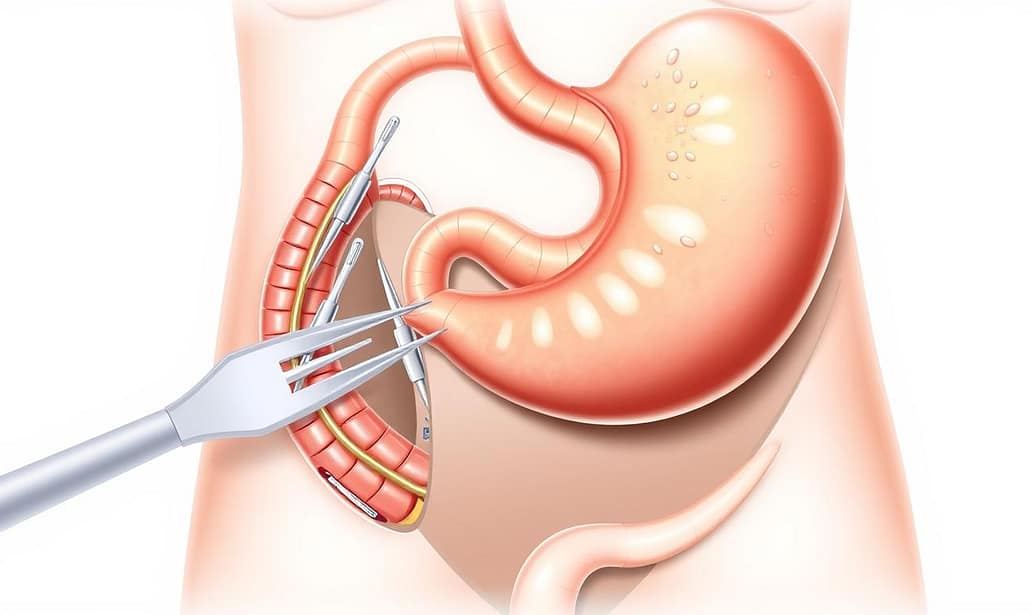
The mini gastric bypass is like the Tesla of bariatric surgery. It’s sleek, efficient, and leaves old models behind. Unlike traditional bypasses, which are like complicated plumbing, this method shows that less can be more.
The surgery takes about 61 minutes, quicker than most TV shows. Surgeons first make a sleeve gastrectomy, cutting stomach size by 75%. This step targets ghrelin, the hunger hormone, to reduce cravings.
Then, they make a single connection between the stomach and ileum. This is different from the Roux-en-Y method, which is more complex. The connection is about 300cm from the ileocecal valve, the perfect spot for metabolic benefits.
This method is brilliant because it creates a “metabolic express lane.” Food goes straight to the hindgut, triggering hormones that control hunger. The system also keeps duodenal access open, ensuring nutrients are absorbed well.
| Procedure Aspect | SADI/SASI Approach | Traditional Bypass | Advantage |
|---|---|---|---|
| Anastomosis Count | Single connection | Multiple connections | Reduced complication risk |
| Operative Time | ~61 minutes | 90-120 minutes | Faster recovery |
| Anatomical Modification | Stomach sleeve + ileum connection | Complex rearrangement | Simpler physiology |
| Metabolic Pathway | Direct to hindgut | Multiple pathways | Enhanced hormone response |
The surgical procedure is simple yet powerful. It’s not just about losing weight. It’s about changing how your body works.
Patients often ask about how it works. Think of your digestive system as a delivery network. The mini gastric bypass prioritizes nutrient delivery while keeping everything running smoothly.
The metabolic effects are impressive. Nutrients go straight to the hindgut, updating your body’s software. This boosts GLP-1, controlling hunger, and ensures nutrients are absorbed properly.
This method marks a big step in bariatric surgery. It moves from complex solutions to simple, effective ones. It’s not just about size; it’s about making your metabolism better.
Candidacy
Think of SADI eligibility as the velvet rope at an exclusive metabolic nightclub. The bouncer is picky, but the party inside is worth it. This isn’t your average weight loss program. We’re talking surgical precision in patient selection that would make a Swiss watchmaker nod in approval.
The traditional BMI benchmarks remain key gatekeepers. Candidates typically need:
- BMI over 40 (no comorbidities required)
- BMI 35-40 with obesity-related conditions
- BMI 30-35 with significant metabolic disorders

But here’s where modern medicine gets interesting. That BMI 30 threshold isn’t just a number. It’s a metabolic tipping point. We’re seeing approval for patients whose biological metrics tell a more compelling story than their scale weight.
The real magic happens when insulin resistance turns your metabolism into a bureaucratic nightmare. Every calorie requires triple paperwork to get processed.
The perfect candidate isn’t just someone who’s heavy. They’re metabolically complicated. Picture someone whose medication list reads like a CVS receipt, whose sleep apnea could power a small turbine, or whose pre-diabetic markers are waving red flags despite “normal” glucose levels.
These are the patients where SADI doesn’t just subtract weight. It rewrites metabolic code.
Former sleeve gastrectomy patients experiencing weight regain represent another fascinating candidate pool. For them, SADI acts like a metabolic software update for hardware that’s underperforming. It’s the surgical equivalent of taking your body’s operating system from Windows 95 to Windows 11 – same machine, radically improved performance.
The selection process involves more than just numbers. Surgeons evaluate psychological readiness, nutritional understanding, and commitment to lifestyle changes. It’s not about finding perfect patients. It’s about finding patients perfectly suited for this specific metabolic intervention.
Recent guidelines have expanded to include those with lower BMI but severe metabolic syndrome. This isn’t weight loss for vanity. It’s metabolic redemption for survival. The criteria evolution reflects our growing understanding that obesity isn’t just about mass. It’s about metabolic dysfunction that deserves serious intervention.
Benefits vs Traditional Surgeries
When it comes to weight loss surgery, we all want the best. The SASI procedure is like a high-tech upgrade. It’s not just another choice; it’s a game-changer.
Traditional gastric bypass is like a complicated machine. It’s complex and often leads to problems. SASI is simple, with just one connection point. It’s like comparing a Swiss Army knife to a chef’s knife.
The numbers show SASI is a winner. It offers 93.3% excess weight loss at four years. This beats other surgeries by a long shot.
Comorbidity resolution is where SASI shines. Diabetes remission rates hit 93%. Hypertension resolves in 73% of patients. Hyperlipidemia improves in 83% of cases.
The safety profile of SASI is impressive. Short-term complications are just 2.5%. Long-term problems are 4.6%, mostly gallstones. This is much better than older procedures.
Nutritional benefits of SASI are huge. There’s no hypoalbuminemia, and vitamin levels improve. Malabsorption is rare, unlike older procedures.
The SASI approach is about more than weight loss. It offers lasting results without constant upkeep. Why choose a vintage car when you can have a Tesla?
Risks & Considerations
The mini gastric bypass procedure may help with weight loss, but it has its own risks. It’s like picking between political candidates. Each choice has good and bad points that appeal to different people.
About 2.2% of patients get new GERD symptoms after surgery. Most manage with occasional meds, but it’s a hassle. Dumping syndrome, with its nausea and diarrhea, is another issue when sugar moves too fast.
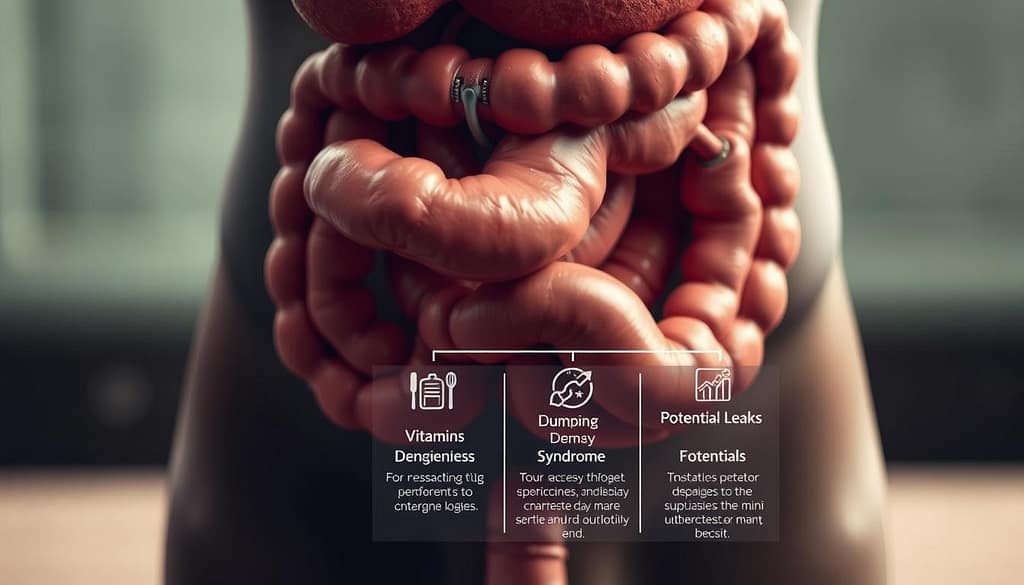
Nutritional deficiencies are a big deal if you don’t take supplements seriously. Your body absorbs fewer nutrients, making vitamins and minerals essential for your weight loss journey.
The risk of gallstones is about 2.5%. It seems rapid weight loss and gallbladder problems often go hand in hand. But the mini gastric bypass has a clear advantage over traditional methods.
The rate of anastomotic leaks is just 0.3%, much lower than RYGB’s 2-3% according to complication data studies. The risk of internal hernias is almost zero, thanks to the single-loop design that avoids complex rerouting.
The real consideration isn’t avoiding risks entirely – it’s picking which ones you prefer. It’s like deciding between a possible fender bender and engine failure. The data shows 96% of patients would choose it again, a number that would make any politician envious.
In the end, you’re not picking between risk and no risk. You’re picking between different risks, and for many, the simpler approach is more appealing.
Patient Experiences
Let’s talk about what happens after SADI surgery. The first 24 hours feel like a tough workout, but without the cheers or protein shakes.
Most patients start with clear liquids hours after surgery. They’re home in 1-2 days and back to work in a week. It’s like a tough business trip that changes you.
The diet changes slowly, like a culinary journey:
- Weeks 1-2: Liquid diets that make juice cleanses seem extravagant
- Weeks 3-4: Pureed foods that would disappoint a Michelin star chef
- Month 2+: Gradual reintroduction of normal textures
Energy changes too. Patients feel like zombies at first, but then find a new energy source around week three. It’s not just feeling less tired; it’s feeling alive again.
Weight loss is slow but steady. It’s like watching ice melt – you don’t notice it until it’s all gone.
The best stories are about non-scale victories:
- Blood pressure medications cut in half within weeks
- Diabetes medications becoming historical artifacts
- Sleep apnea machines gathering dust in closets
These clinical outcomes show a real change. It’s not just about looking different; it’s about feeling privileged.
Patients start doing things they used to love again. They can tie their shoes easily and even take the stairs. The surgery changes your body and your view of life.
Conclusion: Is SASI Right for You?
Is the SASI procedure your metabolic game-changer? If you’re looking for surgical elegance with proven results, the data supports it. This isn’t a one-size-fits-all solution.
If the thought of lifelong vitamins or digestive changes worries you, traditional options might be better. But for those seeking a metabolic upgrade, SASI is worth considering.
Four-year results show sustained excellence, and ASMBS backing adds serious credibility. It’s like metabolic insurance with excellent terms. Goldilocks would approve of this balance between restriction and absorption.
With conversion pathways available and techniques refining yearly, SASI isn’t just another choice—it’s potentially the future of metabolic surgery. The question isn’t if SASI works, but if you’re ready for that level of transformation.