
One Anastomosis Gastric Bypass (OAGB) is a modern form of metabolic and bariatric surgery. It has gained recognition for its effectiveness in promoting significant, long-term weight loss. The American Society for Metabolic and Bariatric Surgery has endorsed this approach since 2022.
This laparoscopic procedure is less complex than older methods. It involves creating a new, smaller stomach pouch. This pouch is then connected directly to the small intestine with a single connection.
The design of the operation helps people feel full sooner and absorb fewer calories. It is known for having fewer complications and requiring a shorter hospital stay compared to traditional options.
This article provides a clear overview of how OAGB works. We will detail the surgical process and the powerful health benefits it can offer. These benefits include improving conditions like type 2 diabetes.
We will also honestly address potential risks and important lifestyle changes required after surgery. Understanding both the advantages and challenges is crucial for anyone considering this path.
For many struggling with obesity, OAGB represents a powerful tool. It can combat serious weight-related diseases and lead to a dramatically improved quality of life.
What Is Mini Gastric Bypass (One Anastomosis Gastric Bypass)?
Developed as a simpler alternative, the mini gastric bypass procedure focuses on altering digestion for lasting weight reduction. It is formally named the One Anastomosis Gastric Bypass (OAGB). This name highlights its key technical feature: a single connection in the digestive tract.
A Simplified, Metabolic Weight Loss Procedure
This operation is not just about making the stomach smaller. It is a potent metabolic surgery. It changes how your body processes food and regulates hormones.
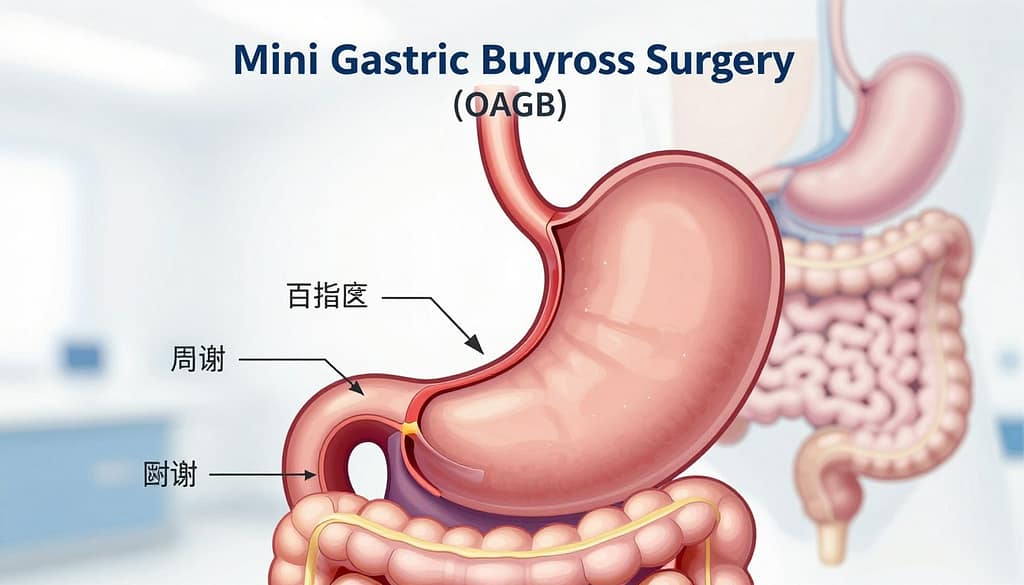
The anatomical goal is specific. Surgeons create a long, tube-shaped pouch from the stomach. This new pouch is then connected directly to a loop of the small intestine.
A portion of the digestive tract is bypassed. This design reduces calorie absorption. It also triggers beneficial changes in gut hormones.
These hormonal shifts help curb appetite and improve metabolism. The result is a powerful tool for significant and sustained weight reduction.
Historical Context and ASMBS Recognition
The technique joined the surgical lineup in 1997. It was designed as an abbreviated version of more complex historical operations. Over the years, refinements have enhanced its safety and outcomes.
For a long time, it was considered relatively new in the United States. This changed in 2022. The American Society for Metabolic and Bariatric Surgery (ASMBS) gave it a major endorsement.
The ASMBS recognized OAGB as a standard of care. This decision lends significant credibility to the procedure. It also helps guide insurance coverage and surgical practice nationwide.
Despite its global popularity, experience with this operation is still growing among U.S. surgeons. This makes choosing a highly experienced surgeon a critical step for any patient.
| Aspect | Description | Significance |
|---|---|---|
| Primary Design | Single connection (anastomosis) between stomach pouch and small intestine. | Simplifies the operation, potentially lowering surgical time and risk. |
| Mechanism of Action | Combines restriction, mild malabsorption, and hormonal changes. | Promotes weight loss through multiple physiological pathways. |
| Historical Introduction | First described in 1997. | Represents a modern evolution of bariatric techniques. |
| Formal Recognition | Endorsed as standard care by ASMBS in 2022. | Validates its safety and efficacy for widespread use. |
| Surgeon Experience | Growing but varied in the U.S. | Highlights the importance of selecting a qualified, experienced provider. |
The journey from a novel concept to a recognized standard reflects its evolution. It stands as a streamlined and effective option for many people seeking a surgical solution for obesity.
How the Mini Gastric Bypass Procedure Works
The success of the operation hinges on three key anatomical changes achieved during surgery. Surgeons perform it using a laparoscopic approach. This means they make several small incisions in the abdomen.
A tiny camera and specialized instruments are inserted through these openings. This technique minimizes invasion, reduces scarring, and typically leads to a faster recovery.
Creating the New Stomach Pouch
The first surgical step is to divide the stomach. Using surgical staplers, the surgeon separates it into two distinct sections.
One section becomes the new, functional stomach. It is shaped into a long, narrow tube often described as banana-shaped. This new pouch drastically reduces functional stomach capacity.
It holds only a small amount of food at one time. This creates a powerful sense of fullness after eating very little.
The Single Anastomosis Connection
Next, attention turns to the small intestine. A loop is measured out, typically 150 to 200 centimeters from the stomach.
The term “anastomosis” refers to a surgical connection between two hollow structures. This operation is defined by having only one such connection.
The top of the measured intestinal loop is then joined to the newly created stomach pouch. This creates a direct pathway for food to travel.
This single connection simplifies the procedure compared to techniques requiring multiple joins. It can contribute to shorter operative time.
Bypassing Part of the Digestive Tract
A significant portion of the digestive system is sealed off from the new food stream. The larger, remaining section of the stomach is bypassed.
Approximately seven feet of the upper small intestine, including the duodenum, is also bypassed. Food no longer enters these areas.
The immediate result is a new route for nutrition. Food goes from the esophagus into the small stomach pouch. It then moves directly into the mid-section of the small intestine.
The bypassed organs remain in the body. They continue to receive blood supply and secrete digestive juices.
These juices now mix with food much further down the intestinal tract. This alteration is a key part of the weight loss mechanism.
The Mechanism of Weight Loss: How OAGB Works
This operation’s effectiveness isn’t magic; it’s science, driven by restriction, malabsorption, and hormonal shifts. These three mechanisms work together to create a powerful, sustained impact on body weight and metabolic health.
Restriction: Reduced Stomach Capacity
The first mechanism is physical restriction. Surgeons create a new, long pouch from the existing stomach. This pouch holds only a small volume.
You will feel full much sooner when eating. This naturally leads to a lower calorie intake at every meal. It is a foundational part of the weight loss process.
Malabsorption: Bypassing the Small Intestine
The second component involves changing the digestive pathway. A key section of the small intestine is bypassed.
This includes the duodenum and part of the jejunum. Approximately 150 to 200 centimeters (up to seven feet) is sealed off from the food stream.
The body’s ability to absorb calories and fats is deliberately reduced. This malabsorptive effect adds a significant layer to the operation’s power.
Hormonal Changes: Curbing Hunger and Improving Metabolism
The most profound impact may be hormonal. Rerouting food alters gut-brain signaling almost immediately.
Levels of hormones like GLP-1 and PYY increase. These hormones are powerful appetite suppressants. They enhance feelings of fullness and reduce food cravings.
This hormonal shift also has a direct metabolic benefit. Insulin sensitivity improves rapidly. Many patients see their type 2 diabetes enter remission, sometimes before major weight reduction occurs.
The synergistic effect of all three mechanisms is key. Restriction limits intake, malabsorption reduces uptake, and hormonal changes regulate appetite and metabolism.
This multi-faceted approach is why OAGB can be more effective for certain conditions than purely restrictive procedures. It offers a comprehensive tool for transforming long-term health.
Advantages and Benefits of Mini Gastric Bypass Surgery
The decision to undergo metabolic surgery is significant. Understanding the distinct advantages of this approach can provide clarity and confidence.
One Anastomosis Gastric Bypass offers a compelling set of benefits. These range from powerful weight reduction to major improvements in overall health.
Safe and Effective with High Weight Loss Success
Clinical data strongly supports the efficacy of this operation. A 2020 study reported excess weight loss of up to 73% after five years.
This result can be superior to outcomes from the Roux-en-Y technique. The streamlined design contributes to reliable, long-term success.
Patients achieve significant and sustained reduction in body mass. This forms the foundation for transforming their health.
Improvement or Resolution of Obesity-Related Diseases
The benefits extend far beyond the number on the scale. Many serious conditions see dramatic improvement or even full remission.
This includes Type 2 diabetes, hypertension, and high cholesterol. Non-alcoholic fatty liver disease and obstructive sleep apnea also improve.
Reducing the disease burden is a primary goal. It leads to less medication dependence and a healthier life.
Lower Complication and Ulcer Risk Compared to Traditional Bypass
The single connection simplifies the anatomy. This translates to a lower reported risk of technical issues.
Risks like leaks, internal hernias, and small bowel obstructions are reduced. A 2022 study found a lower complication rate and shorter hospital stay versus Roux-en-Y.
Bile now flows past the stomach pouch. This coats the intestinal lining and is linked to a lower chance of marginal ulcers.
Shorter Operative Time and Hospital Stay
The average surgical time is often under two hours. This is due to the single anastomosis technique.
Patients typically require only a one to two-night hospital stay. A quicker recovery allows people to return to normal activities sooner.
Less time under anesthesia and in a medical facility is beneficial. It contributes to the overall safety profile.
The Potential Benefit of Dumping Syndrome
Dumping syndrome is a physical reaction to high-sugar foods. It can cause nausea, sweating, and diarrhea.
While unpleasant, this effect acts as a powerful behavioral tool. It naturally discourages poor dietary choices.
This aids long-term compliance with nutritional guidelines. It supports lasting weight loss success.
Reversibility of the Procedure
A unique psychological safety net exists. The anatomy can be restored to normal if medically necessary.
This is possible because no organs are removed during the operation. The stomach and intestine are simply rearranged.
Knowing the option for reversal exists provides peace of mind. It underscores the care taken in preserving bodily integrity.
Together, these advantages contribute to a markedly improved quality of life. Patients enjoy increased mobility, better health, and greater longevity.
The benefits of this path are both physical and psychological. They offer a comprehensive solution for those struggling with obesity.
Potential Risks and Disadvantages of Mini Gastric Bypass
While the One Anastomosis Gastric Bypass offers significant benefits, a thorough evaluation requires an honest look at its potential downsides. Understanding these challenges is crucial for making a fully informed decision.
These considerations range from financial and logistical hurdles to specific medical risks that require lifelong management.
Limited Insurance Coverage in the United States
A major practical hurdle for many Americans is insurance. Many major U.S. insurers still classify OAGB as investigational.
This means they do not provide coverage for the operation. Patients often face the prospect of self-pay, which can be a significant financial barrier.
Some providers, like Duke Health, work with insurers that do offer coverage. Blue Cross Blue Shield of North Carolina is a known exception.
It is essential to verify your plan’s specific policy well in advance.
Risk of Bile Reflux and Long-Term Monitoring
Bile reflux is a specific concern with this anatomical rearrangement. It involves the backward flow of digestive bile from the small intestine.
This bile can enter the stomach pouch and even the esophagus. It can cause inflammation, gastritis, and significant discomfort.
Studies report an incidence rate between 0.9% and 4%. Long-term exposure raises concerns for conditions like esophagitis.
In some cases, it may increase the risk for Barrett’s esophagus. This underscores the need for regular endoscopic surveillance for affected patients.
Higher Rates of Nutritional Deficiencies
The malabsorptive nature of OAGB directly impacts nutrient uptake. Deficiencies are more common compared to purely restrictive procedures.
Key nutrients that require vigilant, lifelong supplementation include:
- Iron and Vitamin B12
- Calcium and Vitamin D
- Fat-soluble vitamins (A, D, E, K)
- Folate
Without strict adherence to supplement protocols, these deficiencies can affect long-term health.
Considerations for Patients with GERD
For individuals with pre-existing gastroesophageal reflux disease (GERD), caution is advised. The altered anatomy can sometimes worsen reflux symptoms.
Increased exposure to bile may also occur. Surgeons often counsel those with symptomatic GERD against choosing this path.
Alternative weight loss operations might be recommended instead.
| Potential Risk | Reported Incidence / Concern | Essential Management Strategy |
|---|---|---|
| Bile Reflux | 0.9% – 4% of patients | Medication, dietary adjustments, possible endoscopic surveillance. |
| Nutritional Deficiencies | Higher than sleeve gastrectomy | Lifelong, high-dose vitamin/mineral supplements and regular blood tests. |
| Insurance Coverage | Limited in the U.S.; often considered investigational | Pre-approval investigation, exploring self-pay or specific provider networks. |
| Worsening of GERD | Significant concern for patients with pre-existing condition | Often a contraindication; alternative procedures should be considered. |
| Anastomotic Stricture/Ulcer | ~1% incidence rate | Managed via endoscopic dilation or medication; rare. |
Other surgical complications, like strictures at the connection site, occur in about 1% of cases. Intestinal ulcers are also a rare possibility.
It is vital to remember these risks are generally manageable. Success hinges on a committed partnership between patient and surgeon.
Strict adherence to post-operative guidelines and a structured long-term follow-up plan are non-negotiable. When these commitments are met, the powerful benefits often far outweigh the potential disadvantages for the right candidate.
This balanced view empowers you to assess if this path aligns with your lifestyle and health profile.
Mini Gastric Bypass vs. Other Weight Loss Surgeries
For individuals considering a surgical solution, comparing the One Anastomosis Gastric Bypass to other common operations provides critical insights.
This analysis helps clarify which technique might align best with your health goals and personal profile.
Comparison with Roux-en-Y Gastric Bypass
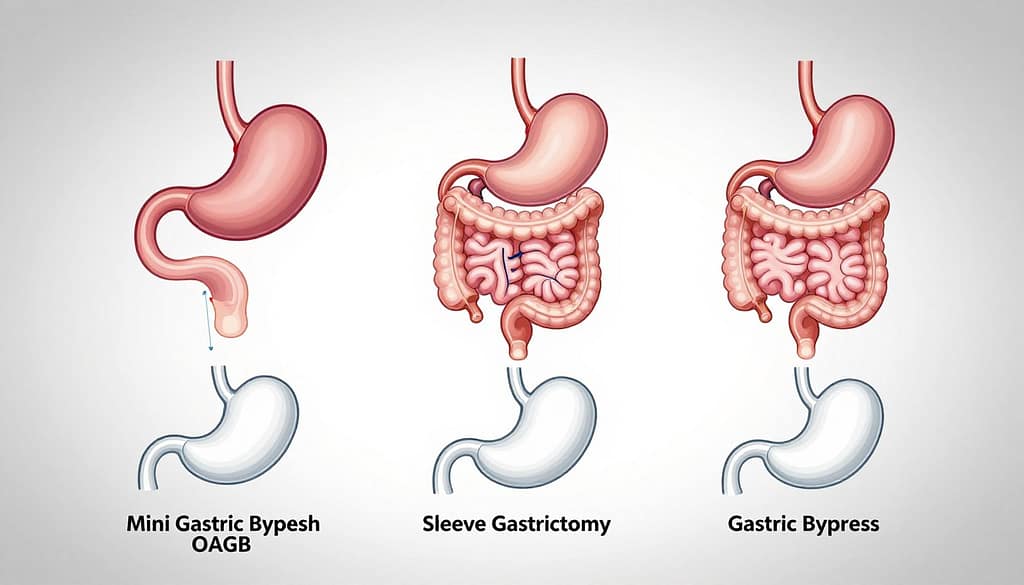
The Roux-en-Y technique has long been a gold standard. A key difference lies in the number of intestinal connections.
OAGB uses a single anastomosis. Roux-en-Y requires two, making it a more complex reconstruction.
This simplicity often translates to a shorter operative time for OAGB. It may also contribute to a lower risk of certain complications.
These include internal hernia and small bowel obstruction. Studies show weight loss outcomes are similar or even superior.
One analysis reported 73% excess weight loss at five years with OAGB. This compares to about 60% for Roux-en-Y.
A trade-off exists. OAGB carries a potentially higher chance of bile reflux into the stomach pouch.
This is due to the loop anatomy. It’s a factor your surgeon will carefully weigh.
Comparison with Gastric Sleeve (Sleeve Gastrectomy)
The gastric sleeve is a purely restrictive procedure. It involves surgically removing a large portion of the stomach.
OAGB does not remove any organ. It is both restrictive and malabsorptive.
This dual mechanism can lead to more significant weight loss for some people. It also offers a stronger metabolic effect.
For patients with severe Type 2 diabetes, OAGB may provide better odds of remission. This is due to its hormonal impact and duodenal exclusion.
The trade-off is a higher risk of long-term nutritional deficiencies. Vigilant supplementation is non-negotiable.
Another crucial distinction involves reflux. The gastric sleeve can sometimes worsen GERD.
OAGB is generally not advised for those with pre-existing, symptomatic GERD. This is a major factor in patient selection.
When Mini Gastric Bypass May Be the Preferred Choice
This operation can be an excellent fit in specific scenarios. It is often considered for individuals needing powerful metabolic benefits alongside significant weight loss.
It may be recommended for those who have not achieved their goals with a purely restrictive procedure, like a sleeve. In such cases, OAGB can serve as an effective revision surgery.
The ideal candidate typically does not have problematic GERD. They must also commit to lifelong nutritional support and medical follow-up.
Understanding the full pros and cons of this procedure is a vital part of the decision-making journey.
Ultimately, the best choice is highly personalized. It depends on your BMI, co-existing diseases, surgical history, and daily life.
A detailed consultation with an experienced bariatric team is essential. They can help determine which path offers the greatest benefits for your long-term health.
Are You a Candidate for Mini Gastric Bypass Surgery?
Eligibility for the One Anastomosis Gastric Bypass is based on specific medical criteria and a commitment to lifelong lifestyle changes. This powerful metabolic operation is not for everyone.
A detailed evaluation by a specialized bariatric team determines if you are a suitable fit. They assess your body, health history, and personal readiness.
Understanding the standard requirements helps you prepare for this important conversation.
BMI and Health Criteria for Eligibility
Body Mass Index (BMI) is a primary screening tool. Most programs follow guidelines set by national health organizations.
Typically, you may qualify if your BMI is 40 or higher. This is classified as severe obesity.
You might also qualify with a lower BMI, between 35 and 39.9. This requires at least one serious obesity-related health issue.
Some centers consider individuals with a BMI as low as 30. This applies if they have significant metabolic problems that are hard to control.
The presence of certain conditions strengthens the case for this intervention. These comorbidities demonstrate a clear medical need.
- Type 2 diabetes and insulin resistance
- High blood pressure (hypertension)
- Abnormal cholesterol levels (dyslipidemia)
- Obstructive sleep apnea
- Non-alcoholic fatty liver disease
These diseases often improve dramatically after the operation. Resolving them is a key goal of treatment.
Ideal Patient Profile and Lifestyle Commitments
The perfect candidate is more than just a set of numbers. They are mentally prepared and deeply motivated.
They understand this is a permanent tool, not a quick fix. Long-term success depends on their active participation.
This means committing to permanent dietary changes. You will eat smaller portions and choose nutrient-dense foods.
Regular physical activity becomes a non-negotiable part of your life. Exercise helps maintain muscle and boost metabolism.
Perhaps the most critical commitment is to lifelong nutritional support. The procedure alters how your body absorbs vitamins and minerals.
You must take high-dose supplements every day, for the rest of your life. Regular blood tests will monitor your levels.
Without this strict regimen, you risk developing serious deficiencies. Your team will provide detailed guidance.
The Importance of Choosing an Experienced Surgeon
Selecting your surgical provider is one of the most crucial decisions. The OAGB technique is still growing in popularity among U.S. surgeons.
Its relative novelty makes specific experience vital. You need a surgeon and center with documented expertise in this particular operation.
Look for a practice affiliated with an accredited bariatric center. For example, Duke Regional Hospital is accredited by the American Society for Metabolic and Bariatric Surgery. This accreditation ensures high standards of care.
Before surgery, you will undergo a comprehensive pre-operative evaluation. This includes nutritional, psychological, and medical assessments.
These steps ensure you are ready for the operation and the changes that follow. They set the stage for long-term success.
A key warning involves gastroesophageal reflux disease (GERD). If you have active, severe GERD, this might not be the right path for you.
Bile reflux is a known consideration with OAGB. For this reason, surgeons often steer GERD patients toward alternative procedures like Roux-en-Y.
Prospective candidates are strongly encouraged to seek education. Many leading centers, including Duke, offer free informational seminars.
These sessions let you learn directly from the medical team. You can ask detailed questions to see if this journey is right for you.
| Evaluation Area | Typical Criteria | Why It Matters |
|---|---|---|
| Body Mass Index (BMI) | ≥40, or ≥35 with a major comorbidity. Some programs consider ≥30 with significant metabolic issues. | Establishes the medical necessity for surgical intervention based on obesity severity. |
| Obesity-Related Health Conditions | Type 2 diabetes, hypertension, sleep apnea, fatty liver disease, dyslipidemia. | Demonstrates the health burden that surgery can alleviate; improves eligibility. |
| Psychological Readiness | Motivated, understands lifelong implications, committed to permanent lifestyle change. | Mental preparedness is a strong predictor of long-term success and adherence. |
| Nutritional Commitment | Willingness to take daily vitamin/mineral supplements for life and undergo regular blood monitoring. | Essential to prevent serious deficiencies caused by the malabsorptive nature of the procedure. |
| Surgeon & Center Experience | Provider with specific, documented experience in OAGB, preferably at an ASMBS-accredited center. | Directly impacts surgical safety, technique, and overall outcomes. |
| GERD Status | Absence of active, severe gastroesophageal reflux disease. | Severe GERD may be a contraindication; alternative procedures may be recommended. |
Taking the time to thoroughly evaluate your candidacy is the first step. It ensures you and your medical team are aligned on the best path forward for your health and weight goals.
What to Expect: The Surgical Process and Recovery
Knowing what happens before, during, and after the operation is key to feeling confident and prepared for the changes ahead. This journey is a partnership between you and your medical team, designed for safety and long-term success.
From the first educational seminar to annual check-ups years later, each step has a purpose. Understanding this roadmap helps you navigate the experience smoothly.
Pre-Surgical Evaluations and Seminars
Your path begins with education and assessment. Most programs require attendance at an informational seminar.
This session details the procedure, risks, benefits, and necessary lifestyle changes. It’s your chance to ask questions directly to the surgeon and team.
Following this, you’ll undergo a series of evaluations. A multidisciplinary team ensures you are medically and psychologically ready.
This typically includes consultations with a dietitian and a mental health professional. Various tests are also performed to guarantee surgical safety.
- Complete blood work to check your nutritional status
- An electrocardiogram (EKG) to assess heart function
- Often, an upper endoscopy to examine your stomach and esophagus
These steps create a complete picture of your health. They help the team tailor your care plan for the best possible outcome.
The Laparoscopic Surgical Procedure
On the day of your operation, you will arrive at the hospital. After check-in, you’ll meet with the anesthesia team.
The procedure is performed under general anesthesia, meaning you will be asleep. It is done using a laparoscopic, or minimally invasive, technique.
The surgeon makes four to five small incisions in your abdomen. A tiny camera and specialized instruments are inserted through these openings.
Using this technology, the surgeon creates the new stomach pouch and performs the single anastomosis. The entire operation usually takes between one and two hours.
This approach minimizes tissue damage. It leads to less post-operative pain, smaller scars, and a faster recovery compared to open surgery.
Post-Operative Hospital Stay and Immediate Aftercare
After the operation, you will wake up in a recovery area. Managing comfort is a top priority, and medication is available for any pain.
You will be encouraged to start walking very soon. This simple activity is crucial for preventing blood clots and supporting lung function.
Your diet will begin with sips of clear liquids. This tests the new stomach pouch and ensures there are no immediate complications.
Most patients are ready to go home after just one or two nights in the hospital. Upon discharge, you’ll receive detailed instructions.
These cover how to care for your incisions, manage mild discomfort at home, and recognize warning signs. Knowing what to watch for provides peace of mind.
Long-Term Diet, Vitamin Supplements, and Support
Recovery continues at home with a structured dietary progression. This phased approach allows your body to heal and adapt.
- Weeks 1-2: Full liquids only (protein shakes, broth).
- Weeks 3-6: Pureed foods (similar to the consistency of applesauce).
- Weeks 7-8: Soft, easily chewed foods.
- Week 9 onward: Gradual introduction of regular textures.
Throughout all phases, protein intake is emphasized. You will learn to eat small, slow meals and chew thoroughly.
A non-negotiable, lifelong requirement is daily nutritional supplementation. The malabsorptive nature of the procedure makes this essential for your health.
Your team will prescribe specific, high-potency supplements. These typically include:
- A high-potency multivitamin
- Calcium citrate with Vitamin D
- Iron
- Vitamin B12
Annual blood tests will monitor your levels. This allows for adjustments to your regimen as needed.
Long-term follow-up care is a cornerstone of success. You will have scheduled appointments with your surgeon and dietitian.
These visits occur at 1 month, 3 months, 6 months, 12 months, and then annually. They track your weight loss, nutritional status, and overall well-being.
Ongoing psychological and peer support is also invaluable. Many centers offer organized support groups.
Connecting with others on the same journey provides motivation, shared experiences, and practical strategies. This community support helps you maintain your new, healthy lifestyle for life.
Conclusion
In summary, the One Anastomosis Gastric Bypass (OAGB) stands as a transformative option for those seeking durable metabolic health improvement. This dual-mechanism operation offers powerful weight reduction and significant resolution of conditions like type 2 diabetes.
Key benefits include high efficacy, lower complication rates, and the potential for reversal if needed. However, success requires diligent nutritional management and awareness of considerations like bile reflux.
Outcomes are built on careful patient selection, a skilled surgical team, and your commitment to lifelong lifestyle changes. For motivated individuals, consulting a qualified bariatric surgeon is the essential next step to determine if gastric bypass is right for.
For many, this path has restored health, mobility, and quality of life. It represents a powerful tool for reclaiming your well-being.