If magic wands for weight loss existed, we’d all be waving them while eating cake. This isn’t your grandma’s diet plan. It’s a surgical intervention that’s part medical marvel, part social commentary on our relationship with food.
I’ll walk you through what gastric sleeve surgery actually entails. From the immediate “oh wow” moment when your stomach capacity gets downsized more dramatically than a corporate restructuring. To the long-term lifestyle adjustments that make this more than just a quick fix.
We’re talking about a tool, not a magic wand. This section explores the fundamental reality check: reduced capacity, rapid weight loss that eventually plateaus, and the emotional rollercoaster of changing your relationship with food.
Think of it as the most dramatic kitchen remodel you’ll ever experience. Only this time, the kitchen is your digestive system and the contractor is a surgeon.
What Is Gastric Sleeve?
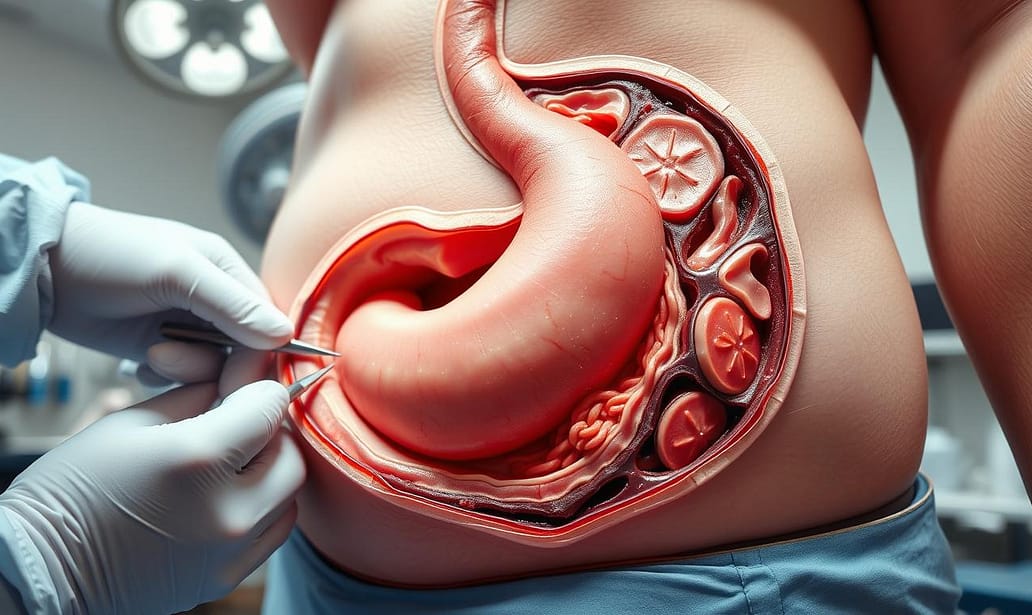
Imagine your stomach as that overly generous friend who always insists you have another helping—the sleeve gastrectomy procedure tells that friend to pipe down. It’s a surgical intervention where about 80% of your stomach is removed. This leaves behind a banana-shaped tube.
This isn’t just cosmetic surgery; it’s a functional redesign. The remaining stomach produces hunger hormones, but its capacity is much smaller. It’s like going from an all-you-can-eat buffet to a Michelin-starred restaurant with small, precisely calculated courses.
Surgeons use laparoscopic magic to create this biological portion control device. They make small incisions, use a camera, and surgical staplers. It’s like a Michelin-starred restaurant where each course is small but perfectly planned.
The sleeve gastrectomy works through two powerful mechanisms:
- Physical restriction: Your new stomach pouch holds about 3-5 ounces instead of the typical 30-50 ounces
- Hormonal changes: Reduced ghrelin production means fewer hunger signals reaching your brain
Think of it as both shrinking the container and turning down the volume on your appetite. The procedure takes 60-90 minutes under general anesthesia. Most patients leave the hospital within two days.
What makes the sleeve gastrectomy clever? It shrinks the stomach and reduces hunger hormones. You enjoy normal digestion but with built-in portion control.
This isn’t stomach stapling from the 1980s. Modern sleeve gastrectomy is precision engineering meets biological science. It helps retrain your relationship with food while working with your body’s natural systems.
Who Qualifies?
To get into the VSG club, you need more than just showing up. You must have a certain medical profile. The club’s bouncer looks at your BMI and medical records, not your shoes or attitude.
To qualify for vertical sleeve gastrectomy, you usually need a BMI of 40 or higher. This is the main entry point. But, if you have a BMI of 35 and obesity-related conditions like diabetes, you can also get in.

The process is quite detailed. You must show that you’ve tried diet and exercise before. It’s like applying for graduate school, where they check your past diet and exercise attempts.
The psychological evaluation is also key. Changing how you view food is a big deal. They make sure your mind is ready for this change as much as your body.
| Qualification Pathway | BMI Requirement | Additional Requirements | Documentation Needed |
|---|---|---|---|
| Standard Qualification | 40+ | None | Medical history, weight records |
| Comorbidity Pathway | 35+ | 1+ obesity-related condition | Medical records, specialist reports |
| Both Pathways | Meeting minimum | Documented weight loss attempts | Diet history, exercise records |
| Psychological Clearance | Any qualifying BMI | Mental health assessment | Therapist evaluation, readiness assessment |
The irony is that you must meet these requirements while carrying extra weight. It’s a challenge that would impress both Kafka and your personal trainer.
So, who qualifies? It’s those who meet the medical criteria, have the right paperwork, and pass the mental check. It’s not just about wanting it; it’s about meeting all the criteria while carrying extra weight.
Benefits & Risks
Let’s explore the gastric sleeve trade-off. It’s like moving from economy to first class, but finding your new seat doesn’t recline fully. The benefits are impressive: losing 60-70% of excess weight, improving type 2 diabetes, and feeling full.
But, the fine print is important. The gastric sleeve isn’t a magic solution. It’s a biological contract with strict rules. You’ll have to control your portions and plan meals carefully.
The winning side of the gastric sleeve equation includes:
- Significant, sustained weight loss that actually sticks
- Improved metabolic health markers across the board
- Enhanced mobility and reduced joint pain
- That satisfying feeling of fullness with smaller meals
The risks are real. You’ll need to take vitamins forever, risk nutrient deficiencies, and face weight regain if old habits return.
The psychological adjustment is tough. You’ll learn to eat in a culture that sees food as a competition. You might feel left out at dinner parties, sipping water while others drink wine.
The social calculus alone could give an accountant anxiety. You’ll need to explain why you’re not drinking, eating less, and taking vitamins precisely. It becomes part of your identity.
This isn’t just surgery; it’s a lifestyle change. You’ll face new challenges and victories. The gastric sleeve journey requires dietary changes, emotional strength, and patience.
Yet, for those who succeed, the gastric sleeve is liberating. It frees you from health issues, mobility problems, and constant weight struggles. It’s a trade: quantity for quality, volume for vitality, and temporary pleasure for long-term wellness.
Surgical Process Step-by-Step
Think of your sleeve gastrectomy as the most efficient home renovation project. The contractors are surgeons, and the blueprint is your digestive system.
You arrive at the hospital after a 12-hour fast. This is your stomach’s last performance before its big change. No food is allowed at this surgical event.
The magic starts with general anesthesia, like legal time travel. While you’re unaware, the team works with precision, like a Swiss watchmaker.
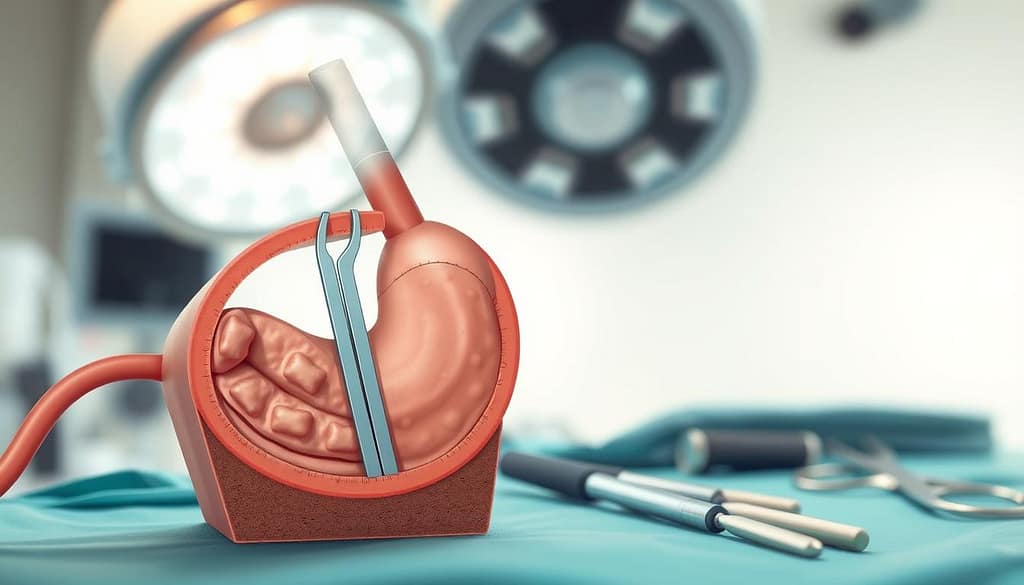
Surgeons make small incisions, your body’s new service entrances. They inflate your belly with carbon dioxide, creating space. This laparoscopic method means less scarring and more access.
A tiny camera is their guide into your body. They use it to see your anatomy clearly. With this view, they use special staplers to divide and conquer.
The main event is removing about 80% of your stomach. It’s reshaped into a slender sleeve, like a banana. This isn’t just weight loss surgery—it’s a permanent change to your anatomy.
The whole process takes 60-90 minutes. That’s quicker than most movies but has a big impact. You wake up to a new digestive reality, thanks to gastric sleeve surgery techniques.
This surgery is a masterpiece of medicine, where science meets art in your belly. The change happens while you sleep, but the benefits last all day.
Post-Op Recovery Timeline
Welcome to your post-VSG recovery timeline. It’s a twelve-month commitment with strict rules and life-changing rewards.
The first 48 hours post-surgery are like a VIP pass to your body’s reboot. You’ll be in the hospital, where doctors watch your pain and make sure you can drink liquids easily. It’s a time of patience with no quick rewards.
Weeks 1-2 turn your kitchen into a liquid-only zone. You’ll drink protein shakes, broth, and sugar-free gelatin. It’s a time when you miss solid food more than you thought possible.
Weeks 3-4 bring the “toddler gourmet” phase. You’ll eat pureed foods that might embarrass adults. Think mashed veggies, thinned cottage cheese, and scrambled eggs.
Months 1-3 are the golden period of fast weight loss. The scale becomes your best friend, showing noticeable changes each week. This is when many people feel a big “wow” moment.
Months 4-12 slow down, and reality hits. Weight loss isn’t as fast, and you need to make lasting changes. This is the hard part—turning temporary rules into lasting habits.
Activity restrictions have their own timeline. Most people take 2-4 weeks off work, depending on their job. Heavy lifting and carbonated drinks are off-limits for a while.
Follow-up appointments become your new social events. Your surgical team will check on you regularly. They’ll make sure your VSG recovery timeline stays on track.
| Time Period | Diet Phase | Activity Level | Weight Loss Pattern |
|---|---|---|---|
| Hospital Stay (1-2 days) | Clear liquids only | Bed rest with walking | Initial fluid loss |
| Weeks 1-2 | Full liquid diet | Light walking only | Rapid decrease |
| Weeks 3-4 | Pureed foods | Increased activity | Steady loss |
| Months 1-3 | Soft foods | Normal non-strenuous | Most dramatic loss |
| Months 4-12 | Solid foods | Full activity | Gradual stabilization |
Incision care is strict. Keep the area clean and dry, watch for signs of infection, and follow your surgeon’s advice. Your scars will tell your VSG story—wear them proudly.
The emotional ups and downs need a warning label. You’ll feel great about weight loss, then frustrated when it slows. This journey has its challenges, but the end is worth it.
Remember, this timeline is not a suggestion—it’s your VSG guide. Stick to it, and you’ll change your health story one portion at a time.
Common Questions
Let’s tackle the questions you’ve been wondering about but haven’t asked. The ones that make you feel a bit shy but are really important to know.
Will the pain be unbearable? They’re removing 80% of your stomach. It will hurt. But, thanks to modern medicine, the pain is manageable. They use strong drugs to help you feel better.
When can I resume… intimate activities? You can start when you feel ready. Just be careful with positions that might hurt your stomach. Listen to your body and wait until it’s okay.
What about alcohol? You can have alcohol again, but your body won’t handle it as well. It’s like your body is fighting against those extra calories. They can really mess up your weight loss goals.
Will I experience hair loss? Yes, for many people. It’s your body’s way of adjusting to big changes. Think of it as a temporary hair loss, not a permanent one.
Loose skin – inevitable or avoidable? You might get loose skin, unless you’re really lucky or plan to get more surgery. How much depends on your age, how fast you lose weight, and how much collagen you make.
Can the gastric sleeve actually fail? Yes, it can. If you don’t treat your new stomach right, it can stretch back out. It’s not magic; it’s about working with your new stomach and changing your lifestyle.
The recovery time usually includes:
- 2-4 weeks to start moving again
- Changing how you eat for life
- Taking vitamins regularly
- Going to check-ups often
Emotional changes can surprise you too. Your relationship with food changes from loving to practical. Adjusting to this can be as big as the physical changes.
Remember, every gastric sleeve journey is different. What works for one person might not work for another. The most important thing is to talk openly with your medical team all along the way.
Success Rates
The real test of sleeve gastrectomy success is the long-term data. It shows if the surgery is a temporary fix or a lasting change. The numbers tell a compelling story.
Most patients lose the most weight in the first 12 months. They shed 60-70% of excess body weight in that year. But, the scale only shows part of the story.
The real magic is in the health transformations. A study shows 70-80% of type 2 diabetes is resolved. Blood pressure and sleep apnea also see big improvements. It’s not just about looking good – it’s about feeling better.
The surgery does a lot at first, but long-term success is up to you. The five-year weight loss rate is 50-60%. This is much better than dieting’s 5% success rate. It’s a big difference between hoping for change and making it happen.
Monitoring your progress is key. Regular check-ins, nutritional adjustments, and exercise are essential. The sleeve gives you a tool, but you must use it.
Think of sleeve gastrectomy as getting a top personal trainer and nutritionist in your body. The initial weight loss is easy. But, keeping it off is the real victory.
The data shows it’s not just about losing weight. It’s about restoring health. The success rates tell a story of transformed lives, not just waistlines.
Conclusion: Next Steps
So you’ve made it to the end of this guide. But remember, the VSG is just the start of your journey. Think of it as the first day of your new life.
After surgery, you’ll need to see your doctors often. Nutritionists, therapists, and support groups will be your team. This is a long-term commitment, like a favorite TV show that never ends.
Your relationship with food will change. You won’t just count calories anymore. You’ll learn to live with a new body and new rules. Every meal will be a balance between what you want and what you can eat.
This journey is not just about surgery. It’s about being ready for life’s next chapter. Are you ready to take on your second act?