In our fast-paced world, many seek quick fixes. The gastric band, approved in 2001, offers a more thoughtful approach. It’s like a lease option for weight loss surgery.
Though it’s now used in just 0.9% of cases, it’s interesting. It doesn’t involve big changes to your body. Instead, it’s a smart reminder to eat slowly. It’s perfect for those who like to keep their options open.
We’ll look into why it’s not as popular as it once was. Yet, it’s a valuable choice for those looking into gastric banding surgery. It offers a unique path to weight loss, with adjustments, not drastic changes.
What Is It?
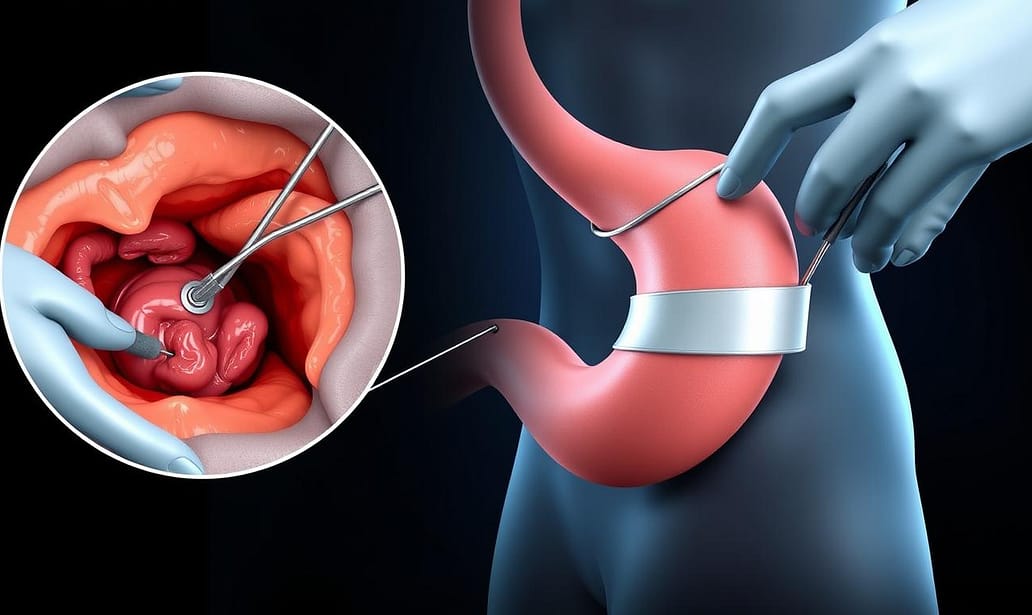
The lap band is like a stomach trainer that never takes a break. It’s a silicone ring that wraps around your stomach. This limits how much food you can eat before feeling full.
The band is simple yet smart. It connects to a small port under your skin. Your doctor can adjust the band’s tightness by adding or removing saline solution.
Unlike other surgeries, the lap band doesn’t change your stomach’s shape. It just adds a bit of control to slow down digestion.
The lap band adjusts to your weight loss needs. You can change how tight it is as you lose weight. It’s a personal way to manage your stomach’s work.
The surgery is done with small cuts, making recovery faster. MedlinePlus says this method has helped many people.
The lap band is special because it’s not permanent. It uses gentle pressure to help you lose weight. It’s a way to lose weight that you can adjust.
This system teaches you to eat the right amount. When you’re full, the lap band lets you know. No need for apps to track your food.
Who Is a Candidate?
Getting an adjustable band is not like joining a gym. It’s more like getting into an Ivy League school. You need to meet strict BMI requirements.
Your BMI is the main test. You must have a score of 40 or higher to qualify. A score of 35-39.9 might also get you in, but you’ll need to show you have serious health issues like diabetes or hypertension.
The selection process is quite detailed. Your medical team will look at your health history. They want to see that you’ve tried different diets and exercise programs.
The adjustable band program is strict about certain health issues. If you have stomach ulcers or substance abuse problems, you won’t qualify. This is to protect your health.
The National Institute of Diabetes and Digestive and Kidney Diseases looks for candidates who are mentally stable and committed to changing their lifestyle. They want people who are ready for a long-term change, not just a quick fix.
The adjustable band system is very selective. It’s for those who have tried everything to lose weight. If you’ve tried many diets and exercise programs, you might be a good candidate.
This is not a quick solution. The adjustable band requires regular adjustments and strict dieting. You’ll also need to see your doctor often. It’s a big commitment.
To qualify, you need good numbers (BMI), a history of trying to lose weight, and no health issues. It’s a combination that shows you’re ready for this life-changing tool.
Band Placement Procedure
Ever wonder how surgeons install that tiny traffic cop for your appetite? The gastric band procedure is less like major construction and more like precision engineering. It’s like Swiss watchmakers at work, not demolition crews.
You’ll be comfortably asleep while the surgical team works their magic. They use a few strategic keyhole incisions. These tiny portals are like your body’s USB ports, allowing instruments and a laparoscopic camera to navigate your abdominal landscape.
The star of the show – that adjustable silicone gastric band – gets carefully positioned around the upper portion of your stomach. This creates a small pouch that fills quickly, sending “I’m full” signals to your brain much sooner than usual. The whole production typically wraps up in 60-120 minutes – roughly the runtime of your average superhero movie.
Here’s what distinguishes this procedure from other weight loss surgeries:
| Procedure Aspect | Gastric Band | Traditional Surgery | Recovery Impact |
|---|---|---|---|
| Incision Size | Small keyhole openings | Larger single incision | Less scarring |
| Hospital Stay | 1-2 days typically | 3-5 days typically | Quicker return home |
| Procedure Time | 1-2 hours | 2-4 hours | Less anesthesia exposure |
| Adjustability | Yes – via port access | Permanent modification | Customizable restriction |
Most patients spend just a night or two in the hospital – perfect for catching up on that streaming queue you’ve been neglecting. Within 2-4 weeks, you’re typically back to your normal routine, just with a new internal portion control assistant.
This lap band procedure represents one of the least invasive entries into bariatric surgery. It’s more system upgrade than complete overhaul – like installing new software.
The adjustable nature of the gastric band means your journey doesn’t end in the operating room. Think of it as having a customizable thermostat for your hunger – you can fine-tune the settings as your needs change over time.
Pros and Cons Compared to Other Surgeries
Let’s play medical MythBusters for a moment. The lap band is like the sensible sedan of weight loss surgeries. It’s not as flashy as other options, but it’s safer and cheaper to maintain.
Pros? It has the lowest complication rates right after surgery. It’s completely reversible if you change your mind. And, it doesn’t change your digestive system permanently.
Cons? You’ll only lose about 40% of your excess weight in two years. Other surgeries can help you lose nearly double that. Also, you’ll need to see your doctor often for adjustments.
The lap band is like the tortoise in a race. It moves slower, but it’s safer. It requires “maintenance mindfulness” – you can’t just forget about it.
Compared to gastric bypass and sleeve gastrectomy, the lap band offers:
- Lower immediate complication rates – fewer dramatic risks
- Complete reversibility – the ultimate “undo” button
- No intestinal rerouting – your anatomy stays the same
But here’s the trade-off:
- 40% excess weight loss average vs 60-70% with other procedures
- Regular adjustment appointments – your new monthly subscription service
- Slower weight loss timeline – this is a marathon, not a sprint
The lap band doesn’t change your digestive story like other surgeries. It’s more like a thoughtful editor. For some, this subtlety is perfect. For others, it’s not enough.
Think of it as choosing between a permanent tattoo and a high-quality temporary one. Both make a statement, but only one lets you change your mind later.
This lap band approach requires teamwork with your medical team. It’s collaborative weight loss, not just surgery. You’re not just a passenger – you’re co-piloting the journey.
Band Adjustments & Aftercare
Think of your gastric band as the world’s most sophisticated musical instrument. It needs regular tuning to perform at its best. The subcutaneous port is your doctor’s way to fine-tune your weight loss journey.
Adjustment sessions are where the adjustable band shines. Your doctor will inject or remove saline through the port. It’s like adjusting the temperature of a fine wine.
Too tight, and you struggle; too loose, and you don’t see results. We aim for the perfect balance.
But, the adjustable band isn’t magic. It’s more like a “behavioral co-pilot.” It suggests changes, but you’re in charge. You must listen to its suggestions.
Your new eating philosophy needs “dietary enlightenment.” You’ll need to make three key shifts:
- Slow dancing with your food – Eating becomes a deliberate act, not a race
- The chew manifesto – Every bite gets the attention it deserves
- The soda prohibition – Carbonated beverages become nostalgic memories
Long-term monitoring is about more than just band adjustments. It’s about changing how you behave around food. You’re not just controlling quantity; you’re changing your relationship with food.
This adjustable band journey turns eating into a mindful act. The instrument is tuned, but you’re the musician creating your new health symphony.
Possible Complications
Let’s talk about the not-so-fun part of your gastric band journey – the possible complications. These can make your experience more like a medical drama than a feel-good story. Even the most advanced medical treatments have their risks, and your gastric band is no exception.
Your band might be like that high-maintenance friend who overstays their welcome. It could erode through your stomach wall, a problem that might show up months or years later. This often means you’ll need to have it removed completely.
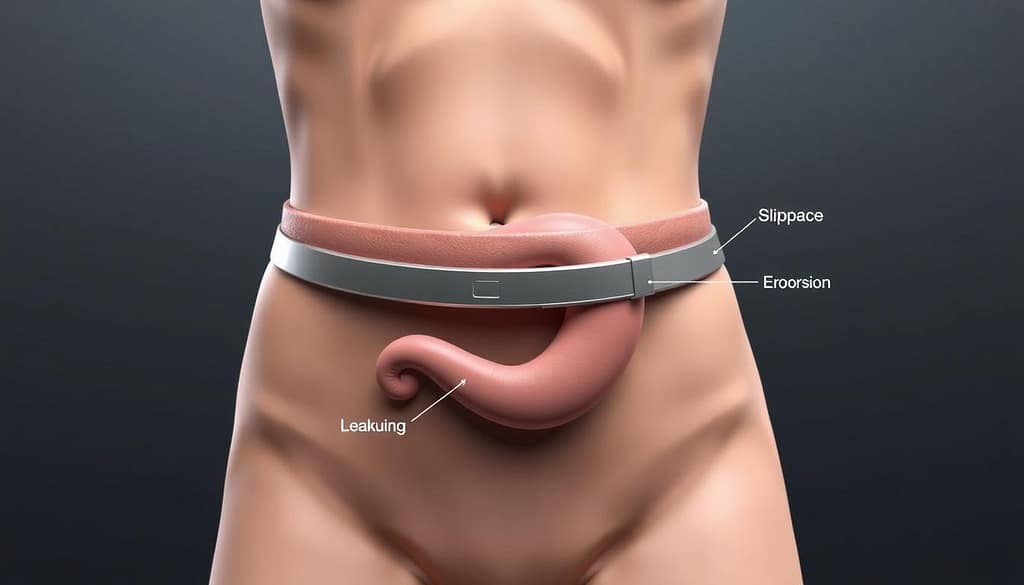
Band slippage is another issue. Your gastric band might move out of place, causing obstruction. Swallowing could become as hard as trying to push a watermelon through a straw.
Leakage is another problem your band might cause. The saline inside can leak out, turning your weight loss tool into a pricey piece of jewelry. It’s like your luxury car suddenly deciding it’s done being a car.
Your esophagus might expand in protest, a condition called “esophageal dilation.” It’s not magical, and eating could become a challenging task.
But there’s a silver lining. The gastric band usually has lower immediate risks compared to other surgeries. It’s less likely to cause serious problems in the first few months. The band takes a long-term approach, for better or worse.
Here’s how the complication risks compare to other weight loss surgeries:
| Complication Type | Gastric Band Frequency | Gastric Bypass Frequency | Sleeve Gastrectomy Frequency |
|---|---|---|---|
| Erosion | 1-3% | Rare | Rare |
| Slippage/Migration | 5-10% | N/A | N/A |
| Leakage | 3-7% | 1-2% | 1-3% |
| Obstruction | 4-8% | 2-4% | 1-2% |
| Esophageal Issues | 5-15% | 2-5% | 3-6% |
Most complications don’t show up right away. They’re slow-burning issues that might take months or years to appear. When they do, you might need more surgery, possibly even removing the band.
The need for revision surgery is about 10-15% within five years. It’s like finding unexpected plumbing issues during a home renovation.
Yet, many patients manage their gastric band journey without major problems. It’s about weighing the risks against the benefits, like deciding whether to trust a suspicious bridge in a movie.
Regular check-ups with your doctor are key to avoiding complications. It’s like keeping your biological Ferrari in top shape – sometimes inconvenient but worth it to avoid bigger problems later.
Conclusion: Band Success
The adjustable band isn’t a magic wand. It’s more like a co-pilot on your weight loss journey. This device requires your active participation. Think of it as a tool for building better habits.
Health Canada and the FDA have kept a close watch on the lap band. Their oversight ensures safety and effectiveness. Patients often achieve significant weight loss—around 40% of excess weight.
Success with the adjustable band hinges on lifestyle changes. You must embrace mindful eating and regular adjustments. It’s about rewriting your relationship with food, one meal at a time.
This approach suits those who prefer minimal invasion but maximum accountability. The lap band offers support while you do the real work. Your commitment turns the band into a lasting solution.