For many people struggling with obesity, traditional diet and exercise plans may not provide lasting results. When non-surgical methods fail to produce substantial or durable weight loss, a more definitive treatment is often needed.
Bariatric surgery is currently the most effective, evidence-based solution for controlling this chronic condition. It offers a powerful option for improving long-term health and outcomes.
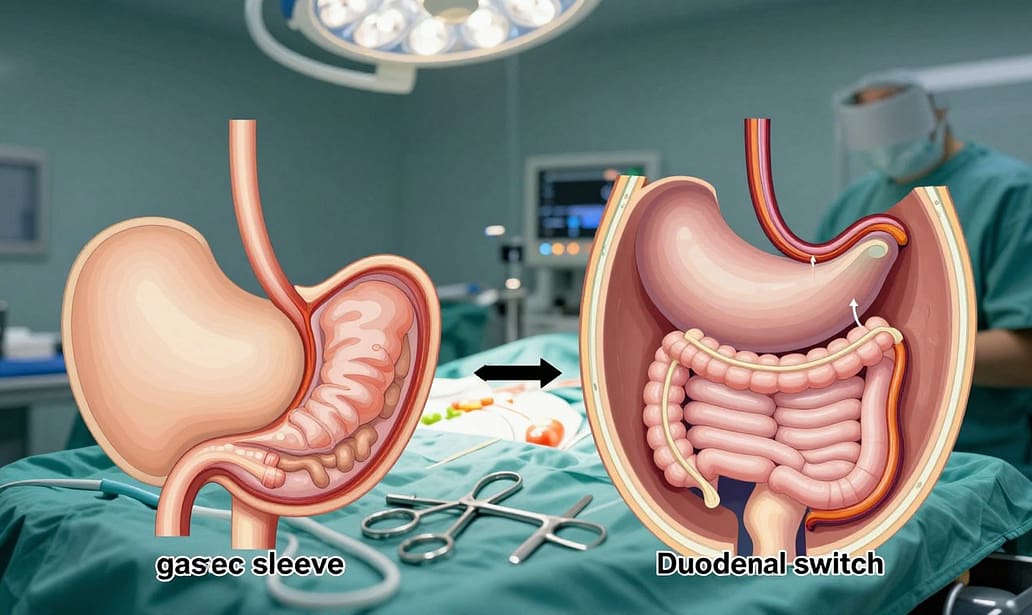
Two major procedures stand out in this field: the duodenal switch (DS) and the sleeve gastrectomy (VSG). Both surgery types are highly successful in helping patients achieve significant weight loss.
However, they accomplish this goal through very different surgical mechanisms. This article provides a clear, head-to-head comparison of these operations.
We will break down the technical details of each procedure. Understanding these differences is critical for anyone considering this path to better health.
It empowers patients and their doctors to make a truly personalized and informed choice.
Introduction: Understanding Your Surgical Options for Weight Loss
Choosing the right surgical approach is a pivotal decision in the journey toward lasting weight management. When lifestyle modifications are not enough, bariatric surgery offers a powerful tool. It can lead to substantial weight loss and major improvements in overall health.
Two leading procedure types dominate this field. The sleeve gastrectomy is the most commonly performed operation in the United States. Its popularity stems from a strong balance of effectiveness and a manageable recovery period.
For some patients, however, a more intensive solution is needed. This is often true for individuals with a higher starting BMI or serious metabolic diseases like type 2 diabetes. In these cases, the duodenal switch or its modern variant, SADI-S, may be recommended.
The core difference between these options lies in their mechanism. A vertical sleeve gastrectomy (VSG) is a purely restrictive procedure. It reduces stomach size to limit food intake and prompts beneficial hormonal changes.
The duodenal switch is a dual-mechanism operation. It combines stomach restriction with malabsorption. This is achieved by rerouting a portion of the small intestine.
This fundamental distinction leads to different outcomes, risks, and long-term care requirements. The choice is never one-size-fits-all. It depends on your unique health profile, weight loss goals, and readiness for lifelong management.
Both are legitimate and highly effective surgery types. They serve slightly different patient populations. Understanding these nuances is the first step toward an informed choice.
The following table summarizes the key introductory differences:
| Feature | Sleeve Gastrectomy | Duodenal Switch |
|---|---|---|
| Primary Mechanism | Restriction (reduced stomach volume) | Restriction + Malabsorption (intestinal rerouting) |
| Typical Patient Profile | Broad range of patients with obesity; lower to moderate BMI | Often recommended for higher BMI (>50) or severe metabolic conditions |
| Weight Loss Efficacy | High, leading to significant excess weight loss | Very high, typically resulting in greater total body weight loss |
| Nutritional Management | Standard vitamin supplementation required | More rigorous, lifelong vitamin and protein supplementation essential |
| Surgical Complexity | Generally less complex, shorter operating time | More complex due to the intestinal component |
This article will serve as your detailed guide. We will explore each procedure‘s technical details, expected results, and lifestyle implications. Our goal is to provide clear, objective information to help you navigate this important health decision with your medical team.
What is Gastric Sleeve Surgery (Vertical Sleeve Gastrectomy)?
The vertical sleeve gastrectomy stands as a cornerstone procedure in modern bariatric surgery. It is a purely restrictive operation that reshapes the stomach to promote significant and sustained weight loss. Known commonly as the “sleeve,” it has become the most performed weight loss surgery in the United States.
This popularity stems from its effective balance of solid results and a manageable risk profile. The operation does not involve any rerouting of the intestinal tract. This makes it distinct from more complex bypass procedures.
The Surgical Procedure: Creating the “Sleeve”
Surgeons perform a vertical sleeve gastrectomy using minimally invasive laparoscopic techniques. They make several small incisions in the abdomen. Through these, they insert a camera and specialized instruments.
The operation involves removing approximately 80% of the stomach. This includes the large, curved portion known as the fundus. The remaining stomach is stapled closed, forming a narrow, banana-shaped tube or “sleeve.”
Critical anatomical structures are carefully preserved. The antrum (lower part) and the pylorus (the valve that controls food exit) remain intact. This allows the new, smaller stomach to function naturally, just with drastically reduced capacity.
Before the procedure, a typical stomach can hold about one quart of food. Afterward, its capacity is reduced to roughly four ounces. This physical restriction is the primary driver of reduced food intake.
How It Works: Restriction and Hormonal Changes
The mechanism of action for this surgery is twofold. First, the smaller stomach size creates a powerful physical limit. Patients feel full much sooner and cannot consume large meals.
Second, and equally important, are the hormonal changes. The portion of the stomach that is removed is the main site of ghrelin production. Ghrelin is often called the “hunger hormone.”
By removing these tissues, the operation leads to a significant and lasting drop in ghrelin levels. This directly reduces feelings of hunger and appetite. The combined effect of restriction and reduced hunger helps patients adhere to a lower-calorie diet with greater ease.
Because the small intestine is not altered, there is no malabsorptive component. Nutrients and calories from food are absorbed normally. This simplifies long-term nutritional management compared to bypass surgeries.
Typical Weight Loss Expectations
Patients considering this path often want to know what results to expect. Clinical data provides clear benchmarks for success. On average, individuals can achieve about 60% excess weight loss (EWL).
In terms of total body weight, this typically translates to a loss of approximately 29%. These outcomes are generally sustained for several years post-operation. The most rapid weight loss occurs in the first 12 to 18 months.
This level of weight loss is often sufficient to bring about major health improvements. It can lead to the remission of type 2 diabetes, lower blood pressure, and improved mobility. The rate of comorbidity resolution is closely linked to the amount of weight lost.
The procedure is highly effective for a broad range of individuals with obesity. It is frequently recommended for those with a lower to moderate starting BMI. Its relative simplicity also contributes to a shorter operating time and a smoother recovery period for most patients.
| Aspect | Details of Vertical Sleeve Gastrectomy |
|---|---|
| Primary Mechanism | Purely Restrictive (no intestinal bypass) |
| Stomach Capacity Change | Reduced from ~1 quart to ~4 ounces |
| Key Hormonal Effect | Removal of ghrelin-producing cells, reducing hunger |
| Average Excess Weight Loss | Approximately 60% |
| Average Total Body Weight Loss | Approximately 29% |
| Nutritional Consideration | Standard vitamin supplementation required; no malabsorption |
| Surgical Complexity | Lower compared to bypass procedures |
| Diet After Surgery | Normal foods in very small quantities; emphasis on protein |
While the outcomes are impressive, it’s important to understand that this is a tool, not a cure. Long-term success depends on permanent lifestyle changes. The smaller stomach allows for normal foods, but portion control is forever altered.
Some individuals may experience weight regain over many years. This is often due to the stomach sleeve stretching slightly or dietary habits loosening. The absence of a malabsorptive component means the body still absorbs all calories consumed.
Overall, the vertical sleeve gastrectomy offers a powerful, simpler surgical option. It provides a strong foundation for transforming one’s health through significant weight loss.
What is Duodenal Switch Surgery (BPD/DS or SADI-S)?
For individuals with severe obesity and related health issues, a dual-mechanism operation offers a powerful solution. The duodenal switch is a combination procedure designed for maximum weight loss and metabolic impact. It exists in two main forms: the classic Biliopancreatic Diversion with Duodenal Switch (BPD/DS) and the modern Single Anastomosis Duodeno-Ileal Bypass with Sleeve Gastrectomy (SADI-S).
Both versions are considered among the most effective bariatric surgery options available. They are particularly recommended for patients with a higher starting BMI or serious conditions like type 2 diabetes. The goal is to achieve profound, long-term change.
The Two-Part Procedure: Sleeve Plus Intestinal Bypass
This operation is performed in two distinct stages. First, a sleeve gastrectomy is completed. This is identical to the standalone vertical sleeve procedure (VSG).
Approximately 80% of the stomach is removed. This creates a narrow tube, drastically reducing its capacity. It also removes the primary source of the hunger hormone ghrelin.
The second stage involves rerouting the small intestine. A significant portion of the upper intestine, including the duodenum, is bypassed. The remaining functional intestine is reconnected to allow food to pass.
This intestinal bypass is the key difference from a purely restrictive surgery. It shortens the path nutrients take through the digestive tract. This limits the absorption of calories and fats.
How It Works: Combining Restriction and Malabsorption
The mechanism of action is a powerful one-two punch. The sleeve component provides restriction. It physically limits how much a person can eat at one time.
The intestinal rerouting introduces malabsorption. This means the body absorbs fewer calories and nutrients from the food that is consumed. The combination leads to a greater energy deficit.
Surgeons can tailor the length of the intestinal bypass. This balances weight loss efficacy with nutritional safety. A longer bypass typically results in more malabsorption.
The classic BPD/DS involves two surgical connections, or anastomoses. This creates separate channels for food and digestive enzymes. They merge only near the colon, allowing for very precise digestion control.
The SADI-S is a simplified version. It uses a single anastomosis. For a detailed look at the differences between these two techniques, explore our resource on SADI-S vs. duodenal switch.
Typical Weight Loss Expectations
Patients undergoing this surgery can expect substantial results. On average, it leads to approximately 80% excess weight loss (EWL). In terms of total body weight, this often translates to a loss of 40% to 50%.
This rate of weight loss is generally higher than that of purely restrictive procedures. Studies show an average of about 73% EWL within two years post-operation. The metabolic outcomes are equally impressive.
Improvement in type 2 diabetes is a hallmark benefit. Resolution or remission rates are very high, often cited between 85% and 100%. Other conditions like hypertension and sleep apnea also see major improvement.
The trade-off for these superior results is a greater long-term commitment. Lifelong, rigorous vitamin and protein supplementation is non-negotiable. This is due to the malabsorptive component of the procedure.
| Feature | Classic Duodenal Switch (BPD/DS) | Single Anastomosis Version (SADI-S) |
|---|---|---|
| Surgical Complexity | Higher; involves two anastomoses (connections) | Lower; involves one anastomosis |
| Malabsorptive Effect | Typically more profound | Significant, but can be adjusted by bypass length |
| Potential Complication Risk | Generally higher due to complexity | Often lower, associated with simpler technique |
| Weight Loss Outcomes | Very high (~80% EWL) | Comparably very high (~80% EWL) |
| Nutritional Management | Requires strict, lifelong supplementation | Requires strict, lifelong supplementation |
| Ideal Patient Profile | Individuals with BMI >50, or >40 with severe comorbidities | Similar profile; often chosen for reduced surgical risk |
Choosing this path is a major decision. It requires a clear understanding of the risk and reward balance. The recovery period may be longer than for less complex operations.
However, for the right patient, it offers an unparalleled tool for transforming health. It provides a powerful strategy to combat severe obesity and its related diseases.
Key Surgical Difference: Restriction vs. Restriction + Malabsorption
Why do some operations yield different weight loss results? The answer is found in their surgical blueprint. The core distinction lies in how each procedure alters your digestive system to create an energy deficit.
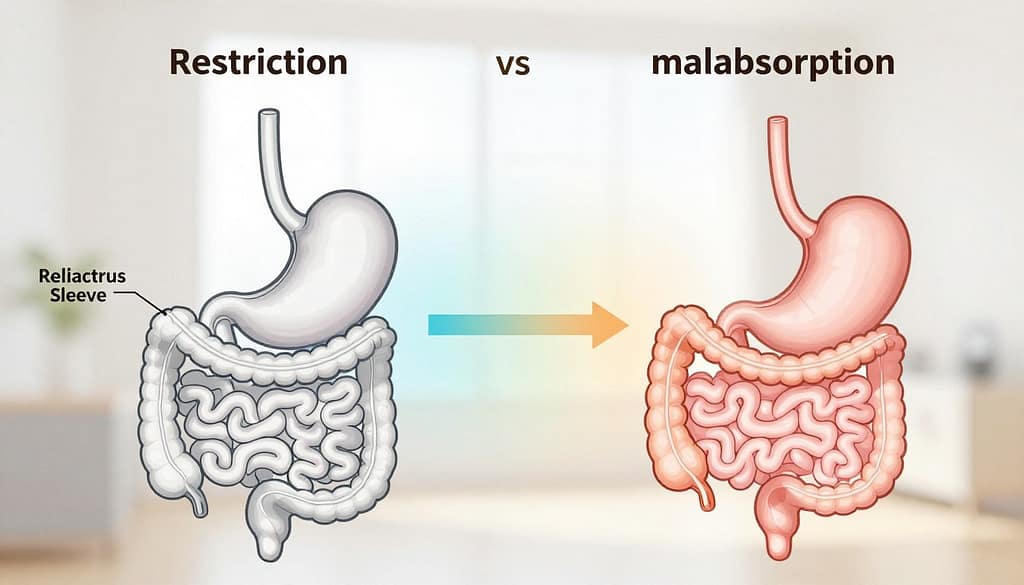
One approach relies on a single method. The other combines two powerful forces. Understanding this fundamental difference is key to setting realistic expectations.
Gastric Sleeve: A Purely Restrictive Approach
The vertical sleeve gastrectomy is a restrictive-only operation. Its entire effect comes from changing the stomach. Surgeons remove a large portion to create a narrow tube.
This new, smaller stomach has two main jobs. First, it physically limits how much food you can eat at one time. You feel full much sooner.
Second, it alters your body’s chemistry. The removed stomach tissue is the main producer of ghrelin, the hunger hormone. With less ghrelin, your appetite decreases significantly.
The small intestine is left completely untouched. Your body absorbs all nutrients and calories from the food you eat normally. This makes long-term nutritional management more straightforward.
Duodenal Switch: A Dual-Mechanism Powerhouse
The duodenal switch is a combination procedure. It is designed for maximum impact. It uses both restriction and malabsorption to drive weight loss.
The first part is identical to a sleeve gastrectomy. The stomach is reduced to a narrow sleeve. This provides the restrictive component.
The second part involves rerouting the intestines. A section of the upper intestine is bypassed. This shortens the path food takes.
This intestinal bypass creates malabsorption. Your body has less time and surface area to absorb calories, especially from fats. The dual attack on intake and absorption creates a larger energy deficit.
This is why excess weight loss percentages are typically higher. It also explains the superior outcomes for metabolic conditions like type 2 diabetes.
Modified Versions: Understanding SADI-S
Surgeons have developed a streamlined version of the classic duodenal switch. It is called Single Anastomosis Duodeno-Ileal Bypass with Sleeve Gastrectomy (SADI-S).
The primary goal is to simplify the surgery while keeping the benefits. The classic DS requires two intestinal connections. The SADI-S uses only one.
This single-anastomosis technique can reduce operating time. It may also lower certain surgical risks. For the patient, the weight loss and health results are very similar.
The trade-off for this powerful mechanism is greater complexity. It also requires a lifelong commitment to vitamin and protein supplements due to the malabsorptive effect.
| Aspect | Purely Restrictive Approach (e.g., Sleeve) | Combination Restriction + Malabsorption (e.g., DS/SADI-S) |
|---|---|---|
| Primary Mechanism | Reduces stomach size and hunger hormones. | Reduces stomach size AND limits calorie/nutrient absorption. |
| Impact on Intestines | No alteration; normal absorption. | Significant rerouting; creates malabsorption. |
| Typical Weight Loss Power | High (~60% excess weight loss). | Very High (~70-80% excess weight loss). |
| Nutritional Management | Standard multivitamin regimen required. | Strict, high-dose, lifelong supplementation essential. |
| Ideal For | Broad patient range; lower to moderate BMI. | Higher BMI or severe metabolic drivers like insulin resistance. |
| Surgical Complexity | Generally lower. | Higher, though SADI-S offers a simplified option. |
In summary, the choice often comes down to needed potency versus management simplicity. A restrictive procedure offers a strong, manageable tool. A dual-mechanism operation provides added power for more challenging cases.
Comparing Outcomes: Weight Loss and Comorbidity Resolution
Beyond the technical details of an operation, what truly matters to patients are the real-world results in weight reduction and health improvement. This section provides a direct, data-driven comparison of the outcomes for both major procedure types.
We focus on two key metrics: excess weight loss and the resolution of obesity-related conditions. Understanding these numbers helps set realistic expectations for your health journey.
Excess Weight Loss: Short-Term and Long-Term Results
The gold standard for measuring surgical success is Excess Weight Loss (EWL). This percentage shows how much of a patient’s extra body weight is lost. The outcomes differ significantly between the two approaches.
The vertical sleeve gastrectomy typically results in about 60% EWL. This is a strong and life-changing result for most patients.
Combination procedures like the duodenal switch and SADI-S are more powerful. They typically achieve around 80% EWL or more. Data shows the DS operation achieves 79 to 85% excess BMI loss at two years.
SADI-S data shows similar weight loss, with 69 to 86% EWL at one to two years. This higher rate is especially notable for individuals with a higher starting BMI.
Long-term durability is another key factor. Malabsorptive procedures tend to maintain weight loss better over many years. The sleeve, while effective, sees a higher rate of regain over time as dietary habits can loosen.
Impact on Type 2 Diabetes and Remission Rates
A major goal of bariatric surgery is to combat metabolic disease. Type 2 diabetes remission is a hallmark benefit. The results here are profoundly different.
The duodenal switch is exceptionally effective. Studies show it results in a 90% remission rate for this condition. SADI-S and DS data show remission rates between 76% and 87%.
These figures are generally higher than those seen with the sleeve gastrectomy. Why the superior metabolic outcomes?
The malabsorptive component does more than just limit calories. It directly alters gut hormones and intestinal nutrient processing. This has a powerful effect on insulin resistance, independent of the weight loss itself.
Improvement in Other Health Conditions
The benefits extend far beyond diabetes. Significant improvement or full resolution is common for many obesity-related conditions. The following table summarizes typical data.
| Health Condition | Typical Improvement with Sleeve Gastrectomy | Typical Improvement with DS/SADI-S |
|---|---|---|
| Hypertension (High Blood Pressure) | Substantial improvement; resolution is common. | Very high resolution rates; SADI-S data shows ~87% resolution. |
| Obstructive Sleep Apnea | Major improvement often seen with weight loss. | High resolution rates; SADI-S data shows ~75% resolution. |
| Polycystic Ovarian Syndrome (PCOS) | Helps regulate hormones and menstruation. | Similar positive effects on hormone regulation. |
| Elevated Blood Lipids (Cholesterol) | Often improves significantly. | Marked improvement due to reduced fat absorption. |
| Fatty Liver Disease (NAFLD) | Improves with weight reduction. | High rates of improvement and resolution. |
It is crucial to note that these are typical ranges. Individual results vary based on patient factors and strict adherence to post-operative guidelines. Both surgery types also commonly alleviate joint pain and improve mobility.
In summary, the data reveals a clear trade-off. Combination procedures offer superior weight loss and comorbidity resolution, especially for metabolic disease. The purely restrictive sleeve surgery provides excellent outcomes with a different management profile. This evidence empowers patients and surgeons to align treatment choices with specific health goals.
Risks, Complications, and Nutritional Considerations
A clear-eyed understanding of potential complications and lifelong nutritional needs is a critical part of preparing for any bariatric procedure. This honest look at the risks and responsibilities helps patients make a fully informed choice.
Every surgery has a unique profile of immediate risk and long-term management requirements. Balancing these factors is key to long-term health and success.
Short-Term Surgical Risks and Complication Rates
The vertical sleeve gastrectomy is known for its relative simplicity. It typically has the shortest operative times, often between 60 and 90 minutes.
Published data shows it also has the lowest leak rates and the simplest early recovery profile. Hospital stays are usually just one to three days.
In contrast, the classic duodenal switch is a more complex procedure. Operating times are longer due to the intestinal bypass component.
Data indicates a leak rate of approximately 1.6% and a reoperation rate near 3.3%. The initial hospital stay and recovery period are also extended.
The SADI-S option compares favorably to the classic DS in terms of operative complexity. Its risk profile often falls between the sleeve and the traditional switch.
Long-term complication rates for SADI-S may not differ significantly from a sleeve gastrectomy when performed by experienced surgeons.
| Procedure | Typical Operative Time | Leak Rate | Reoperation Rate | Hospital Stay |
|---|---|---|---|---|
| Vertical Sleeve Gastrectomy (VSG) | 60-90 minutes | Lowest | Low | 1-3 days |
| Classic Duodenal Switch (BPD/DS) | Up to 4-5 hours | ~1.6% | ~3.3% | 2-4 days |
| SADI-S | Between VSG and DS | Between VSG and DS | Between VSG and DS | 2-4 days |
The Long-Term Commitment: Vitamin and Nutrient Supplementation
The mechanism that drives exceptional weight loss in malabsorptive surgery also changes nutrient absorption. The same intestinal shortcut that limits calorie uptake reduces the uptake of vitamins and minerals.
This creates a non-negotiable, lifelong responsibility. Patients who undergo a duodenal switch or SADI-S must adhere to a comprehensive daily supplement regimen.
Deficiencies in zinc, calcium, iron, and fat-soluble vitamins (A, D, E, K) are primary concerns. DS patients generally have the most extensive supplementation needs.
SADI-S patients also require rigorous daily plans to prevent deficiencies. This is a stark contrast to the needs after a sleeve procedure.
Following a vertical sleeve gastrectomy, the small intestine is intact. Standard supplements like B12 and calcium are required, but the regimen is far less intensive.
Annual blood work and lifelong medical follow-up are essential for everyone. For those with an intestinal bypass, these checks are absolutely critical to prevent serious health outcomes.
Comparing the Risk Profiles
Choosing between these surgery types involves weighing distinct risk-benefit balances. The vertical sleeve procedure offers lower immediate surgical risk and simpler long-term nutrition.
Its trade-off is a potentially lower total body weight loss and a higher chance of weight regain over many years. The stomach tube can stretch slightly, and without malabsorption, all consumed calories are absorbed.
Malabsorptive procedures like the DS and SADI-S offer the potential for greater excess weight loss and superior comorbidity resolution. This is especially true for conditions like type 2 diabetes.
The cost is higher initial surgical complexity and a demanding, lifelong commitment to nutritional vigilance. For a deeper dive into how these profiles compare, review this detailed analysis of duodenal switch versus sleeve.
The right option aligns the procedure‘s power with the patient‘s specific health profile and their readiness for permanent management. An informed choice respects both the remarkable results possible and the serious responsibilities required to achieve them safely.
Recovery Timeline and Required Lifestyle Changes
Successfully navigating the post-operative period is as crucial as the surgical procedure itself for achieving long-term weight management. The operation is a powerful tool, but your commitment to the recovery process and new habits determines your ultimate health outcomes.
This phase involves a structured timeline and permanent lifestyle adaptations. Every patient must be prepared for this journey from day one.
Post-Operative Recovery and Hospital Stay
The immediate recovery experience varies between procedures. A vertical sleeve gastrectomy (VSG) is known for its simpler early recovery profile.
Patients often have a hospital stay of just one to two days. They may return to normal activities like work and light exercise quicker.
In contrast, operations with an intestinal bypass component are more demanding. The classic duodenal switch and SADI-S require more surgical time.
This leads to a longer initial recovery. Hospital stays typically last two to four days. The return to full activity also takes more time.
The body needs extra energy to heal from the intestinal rerouting. Patients must be patient and follow their surgeon’s guidance closely.
| Aspect of Recovery | Vertical Sleeve Gastrectomy (VSG) | Duodenal Switch / SADI-S |
|---|---|---|
| Typical Hospital Stay | 1-2 days | 2-4 days |
| Initial Recovery Demand | Lower; simpler early healing | Higher; more complex healing |
| Key Early Focus | Pain management, hydration, walking | Pain management, hydration, monitoring for complications |
| Return to Normal Activities | Often within 2-3 weeks | Often within 4-6 weeks |
Diet Progression and Permanent Eating Habits
Your relationship with food changes permanently after bariatric surgery. The diet follows a strict, phased progression to protect your healing stomach and new anatomy.
All patients start with clear liquids, then advance to full liquids. The next stages are pureed foods, soft foods, and finally a modified solid diet.
This progression usually spans several weeks. Rushing through these stages can cause serious discomfort or injury.
Permanent eating habits are non-negotiable for success. Meals must be small and protein-first. Thorough chewing is essential to avoid blockages.
Avoid drinking any liquids for 30 minutes before and after meals. This prevents washing food through the system too quickly.
High-sugar and high-fat foods should be strictly limited. They can cause “dumping syndrome” or hinder weight loss.
Hydration and protein intake are critical pillars. Drinking enough water supports all bodily functions.
Adequate protein preserves lean muscle mass during rapid weight loss. It also promotes tissue healing and keeps you feeling full.
The Role of Lifelong Medical Follow-Up
Bariatric surgery is not a one-time event. It is the beginning of a lifelong partnership with your healthcare team. Regular medical follow-up is the single biggest factor influencing long-term success.
This commitment includes scheduled visits with your surgeon and a registered dietitian. Nutritional counseling helps you adapt and troubleshoot your diet over the years.
Annual laboratory monitoring is absolutely essential. Blood tests check for vitamin and mineral deficiencies.
This is especially crucial after malabsorptive procedures like the DS or SADI-S. The risk for deficiencies in iron, calcium, and vitamins A, D, E, and K is higher.
Routine lab work and follow-up with providers experienced in managing bariatric patients are vital. They ensure your nutritional status supports your overall health as you lose weight.
Your final weight loss and health improvements depend entirely on this adherence. Commitment to nutrition, supplements, activity, and lifestyle changes drives the results.
For a comprehensive look at the long-term management required for different major types of bariatric surgery, consult with a specialized center.
Embrace this journey with patience and dedication. The structured recovery and new lifestyle are your pathway to sustained health and well-being.
Conclusion: Choosing the Right Procedure for Your Health Journey
Determining which bariatric surgery is right for you involves weighing clinical factors against your readiness for change. The best weight loss surgery aligns with your unique health profile.
A sleeve gastrectomy offers substantial results with a manageable risk profile. It is an excellent option for many patients.
The duodenal switch provides greater potency for those with higher BMI or severe diabetes. It requires a strong commitment to lifelong nutrition.
Key factors include your starting body weight, metabolic health, goals, and lifestyle. If initial outcomes are insufficient, revision to a procedure like SADI-S may be an option.
There is no single best procedure. Use this knowledge to have a detailed talk with your surgeon. Understanding these differences empowers you to take control of your health journey.