
When we think of weight loss surgery, old images come to mind. Big cuts. Long recovery times. It feels like something from another era.
But today, we have something much better. Laparoscopic bariatric techniques are like a big leap forward. They’re like moving from a flip phone to a smartphone.
These surgeries do more than just help you lose weight. They change how your body works. Years of research have made them some of the most effective treatments today.
So, what’s so special about these surgeries? They use small cuts. You feel less pain. And you recover faster. It’s like going from slow internet to super-fast fiber optic for your health.
This isn’t your grandma’s weight loss surgery. It’s a new way to fix your metabolism with minimally invasive methods. The future is here, and it’s amazing.
How It Works
Your body’s metabolism is like an old computer that needs an update. Laparoscopic surgery changes more than just your stomach size. It also changes how your body works on a deeper level.
Hunger hormones like Ghrelin have controlled you for years. But after surgery, they decrease. Hormones like GLP-1 and PYY, which make you feel full, become more important.
Your digestive system gets the message to help with weight loss. The changes are in several areas:
- Less hunger signals from your brain
- Feeling full after eating less
- How your body absorbs nutrients changes
- Better insulin sensitivity
Many people see their type 2 diabetes improve right away. This is before they lose much weight. It’s like getting quick results from your surgery!
The magic of laparoscopic surgery is in its ability to change your metabolism in many ways. Research from the National Institutes of Health shows it’s like a metabolic reboot. Your body starts working with you instead of against you.
| Metabolic Factor | Before Surgery | After Surgery | Impact Level |
|---|---|---|---|
| Ghrelin (Hunger Hormone) | High Production | Reduced by 60-80% | Major Change |
| GLP-1 (Fullness Hormone) | Moderate Release | Significantly Increased | Major Change |
| Nutrient Absorption | Standard Rate | Selectively Reduced | Moderate Change |
| Insulin Sensitivity | Often Impaired | Dramatically Improved | Major Change |
This isn’t just about losing weight. It’s about changing your body’s chemistry to support your health. Laparoscopic surgery does this through small cuts, but the changes are big.
It’s like updating your metabolism’s software. Old habits like storing fat and feeling hungry are replaced with new ones. It’s a smart way to manage your weight for good.
Procedures Performed Laparoscopically
Laparoscopic bariatric procedures are like luxury cars. Each model has its own features and needs. These minimally invasive methods mean no big surgeries, just small cuts.

The Laparoscopic Sleeve Gastrectomy
The Procedure
Surgeons remove about 80% of your stomach, leaving a banana-shaped “sleeve.” No intestinal rerouting, just pure stomach reduction through small abdominal incisions.
How it Works
The sleeve reduces stomach capacity and removes the part that produces hunger hormones. You feel full faster and stay satisfied longer. It’s like downsizing from a SUV to a sports car.
Advantages
- No foreign devices or complex rerouting
- Excellent weight loss results (60-70% excess weight)
- Significant improvement in obesity-related conditions
- Lower malnutrition risk compared to bypass procedures
Disadvantages
- Irreversible – that stomach tissue isn’t coming back
- Potential for acid reflux issues
- Less effective for super obese patients
- Weight regain possible if eating habits don’t change
The Roux-en-Y Gastric Bypass
The Procedure
Surgeons create a small stomach pouch and connect it directly to the small intestine, bypassing most of the stomach and duodenum. It’s like building metabolic express lanes.
How it Works
Double mechanism: restriction from the small pouch and malabsorption from the bypassed intestine. You get full quickly and absorb fewer calories – metabolic multitasking at its finest.
Advantages
- Gold standard for long-term weight maintenance
- Excellent resolution of type 2 diabetes
- Superior results for reflux disease
- Proven 30+ year track record
Disadvantages
- Higher complexity means longer operating time
- Risk of “dumping syndrome” from sugary foods
- Lifelong vitamin supplementation required
- More difficult to reverse if needed
The Adjustable Gastric Band
The Procedure
An inflatable silicone band placed around the upper stomach creates a small pouch. The band connects to a port under the skin for adjustments.
How it Works
Pure restriction – the band slows food passage, creating early satiety. Adjustments through the skin port allow customization of restriction level.
Advantages
- Least invasive procedure
- Fully reversible
- No cutting or stapling of stomach
- Shortest recovery time
Disadvantages
- Highest revision rate of all procedures
- Modest weight loss compared to other options
- Requires frequent follow-up for adjustments
- Band slippage or erosion possible
The Biliopancreatic Diversion with Duodenal Switch
The Procedure
Combines sleeve gastrectomy with intestinal bypass. More intestine is bypassed than in gastric bypass, creating significant malabsorption.
How it Works
Double whammy: restriction from the sleeve and major malabsorption from the intestinal bypass. This is the metabolic equivalent of a performance supercar.
Advantages
- Highest weight loss of all procedures
- Excellent resolution of metabolic conditions
- Maintains natural stomach outlet
- Very low hunger after surgery
Disadvantages
- Highest nutritional deficiency risk
- More frequent bowel movements
- Complex procedure requiring experienced surgeon
- Lifelong strict nutritional monitoring essential
The Single Anastomosis Duodenal-Ileal Bypass with Sleeve Gastrectomy
The Procedure
Simplified version of duodenal switch with single connection point. Sleeve gastrectomy plus shorter intestinal bypass with one anastomosis.
How it Works
Offers similar metabolic benefits as traditional duodenal switch with simplified technique. Good balance of restriction and malabsorption.
Advantages
- Simpler technique than traditional DS
- Excellent weight loss and metabolic outcomes
- Lower malnutrition risk than full DS
- Growing long-term data showing good results
Disadvantages
- Newer procedure with less long-term data
- Stil requires significant nutritional monitoring
- Not all surgeons offer this technique
- Potential for bile reflux issues
Each of these minimally invasive options represents different trade-offs in complexity, effectiveness, and maintenance requirements. The American Society for Metabolic and Bariatric provides detailed information to help you understand which metabolic vehicle might be right for your journey.
Benefits for Recovery & Safety
Recovering from surgery shouldn’t feel like a demolition derby. Laparoscopic surgery makes the bariatric experience much easier.
Smaller incisions mean less pain after surgery. They also lower the risk of infections. Your scars will look like cat scratches, not road maps.
Hospital stays are now 1-2 days, not weeks. Getting back to normal life is faster, taking only 1-3 weeks.
The safety of laparoscopic surgery is like a luxury hotel. It has fewer complications than many other surgeries.
| Recovery Metric | Open Surgery | Laparoscopic Approach |
|---|---|---|
| Hospital Stay | 5-7 days | 1-2 days |
| Return to Work | 4-6 weeks | 2-3 weeks |
| Pain Management | High narcotic use | Minimal medication |
| Infection Risk | 8-12% | 1-3% |
This isn’t just a technical improvement. It’s a big change in how we see weight loss surgery. The laparoscopic surgery approach changes everything from start to finish.
Risks to Consider
Even the most advanced metabolic upgrades can have risks. Think of it like buying a Tesla – it looks great and performs well, but sometimes needs updates and has quirks like phantom braking.
Nutritional deficiencies can sneak up on you after surgery. Your body might have trouble absorbing:
- Iron and B12 (hello, anemia)
- Calcium and Vitamin D (bones need love too)
- Protein (the building blocks of everything)
This is a long-term issue. You’ll need to take supplements and get regular blood tests for life.
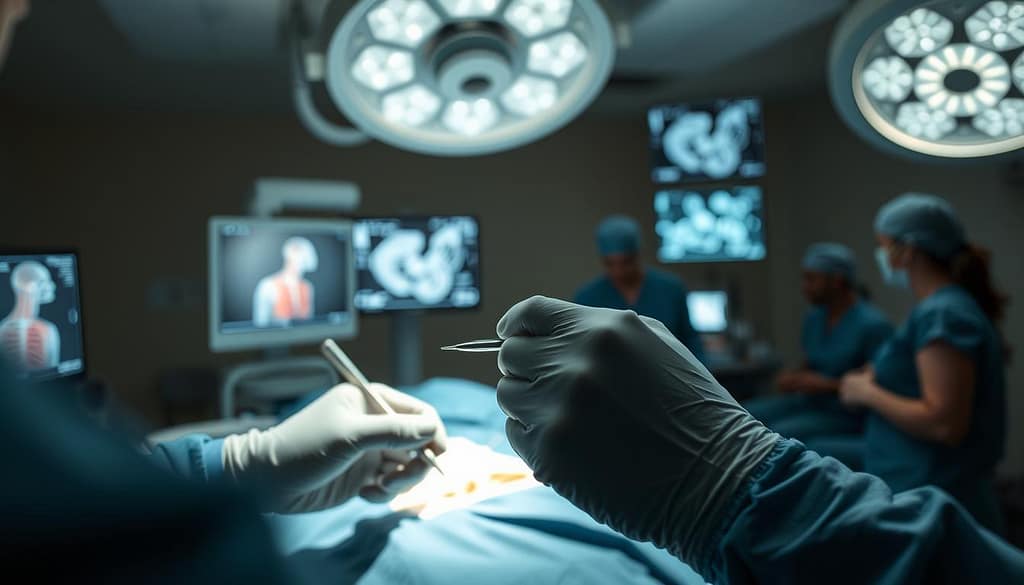
Dumping syndrome is another risk. It’s like a bad hangover and stomach flu all at once. You might sweat, feel nauseous, and have diarrhea.
Other risks include:
- Ulcers at connection sites
- Bowel obstructions (the plumbing gets rearranged)
- Acid reflux that makes sleeping horizontal feel like a mistake
Each surgery has its own risks. Sleeve gastrectomy might make heartburn worse. Bypass procedures can lead to vitamin absorption issues. Duodenal switch operations have slightly higher complication rates.
But, these risks are less than the dangers of obesity. We’re talking about diabetes, heart disease, and a shorter life span. These are the risks you’re trying to avoid.
A study shows that these minimally invasive procedures are often worth the risks for the right people. It’s about choosing the right battle – managing risks for a healthier life.
The important thing is to understand this isn’t magic. It’s about making your body work better with some upkeep. Your job is to take care of that upkeep.
Patient Stories
Forget what you’ve seen on reality TV – the real drama of laparoscopic surgery unfolds in quiet moments of personal triumph. These aren’t sob stories; they’re victory laps with smaller incisions.
Meet our protagonists: ordinary people writing extraordinary comeback stories. Their journeys begin with numbers but end with narratives.
The data tells us gastric bypass patients typically achieve 70% excess weight loss. Duodenal switch warriors often hit 80%. But percentages don’t capture the full picture.
Consider Sarah, a teacher who’d avoided field trips for years. Post-laparoscopic surgery, she’s leading hiking expeditions. Her students call it “The Great Shrinking” – she calls it freedom.
Then there’s Michael, who celebrated his 100-pound loss by buying his first suit in college. The tailor’s measuring tape became his victory ribbon.
These patient stories share common themes:
- Diabetes medications disappearing like magic tricks
- Airplane seats becoming spacious instead of suffocating
- Playgrounds transforming from obstacle courses to joy zones
The real magic? Most patients maintain 50% excess weight loss long-term. That’s not a diet – that’s a lifetime rewrite.
| Procedure Type | Average Excess Weight Loss | Typical Timeline | Life Change Milestone |
|---|---|---|---|
| Sleeve Gastrectomy | 60% | 12-18 months | First pain-free walk in park |
| Gastric Bypass | 70% | 18-24 months | Discontinuing diabetes meds |
| Duodenal Switch | 80% | 24-36 months | Fitting into regular airline seat |
What makes these patient stories compelling? The laparoscopic approach shifts focus from recovery to personal rediscovery. Patients aren’t battling scars; they’re conquering old limitations.
One woman described her metabolic transformation as “unlocking a version of myself I’d forgotten existed.” Another called it “cheating the system without cheating myself.”
These narratives prove laparoscopic surgery isn’t about quick fixes. It’s about sustainable victories. The kind where people stop counting calories and start living lives.
The most common refrain across all patient stories? “I got my life back.” Only this time, with better wardrobe options and significantly improved metabolic credentials.
Their journeys demonstrate that weight loss through laparoscopic surgery creates more than physical changes. It sparks complete metabolic transformation – rewriting health destinies one small incision at a time.
Is It Right for You?
Think of laparoscopic bariatric surgery as the most transformative job you’ll ever have. It’s like becoming the CEO of your own health. But, the interview process is tough.
To qualify, you need a BMI of 40 or higher. Or a BMI of 35 with health issues like diabetes. These numbers are key because they show when your metabolism starts to change.
Meeting the technical requirements is just the start. The real challenge is the psychological and lifestyle check. Are you ready to make a big change for good?
This surgery is a lifelong journey. It changes how you see food, exercise, and yourself. Here’s what you need to do:
- Quit tobacco completely – no negotiations
- Re-evaluate medications that might complicate recovery
- Embrace nutritional education like it’s your new favorite subject
- Commit to medical follow-ups like they’re board meetings for your health
The psychological aspect is fascinating. This surgery does more than change your body. It changes how you see yourself and what you can do.
Wondering if you qualify? It’s not just about your BMI. It’s about if you’re ready for a big change. This detailed guide helps you understand what you need.
The beauty of minimally invasive surgery is more than just small scars. It’s about the big life change you’ll get. But remember, the commitment is huge.
So – are you ready to apply?
Conclusion: The Future Is Minimally Invasive
Bariatric surgery has changed a lot over the years. It used to be open procedures, but now it’s all about laparoscopic surgery. It’s like switching from a sledgehammer to a scalpel – the goal is the same, but the method is much better.
The negative views on weight loss surgery are disappearing quickly. Obesity is not a sign of weakness; it’s a serious metabolic disease. Laparoscopic surgery is a key solution, with less harm and great results.
We’re moving towards a future where medicine and technology blend. Imagine having smarter tools and treatments that fit your body perfectly. The focus is on making things better, not bigger.
This isn’t just a dream; it’s what’s happening with laparoscopic surgery. The methods we use today will lead to even more progress in treating metabolic diseases.
Your journey might start with looking into laparoscopic surgery. But it goes way beyond the surgery room. The real change comes when new medical ideas meet your personal effort.