
Same-Day Discharge after bariatric surgery has drawn attention because some programs may use it for carefully selected patients, while recent studies suggest the safety picture is not uniform. The central issue is not whether leaving the hospital on the day of surgery is always safe or unsafe. The better question is how procedure type, discharge criteria, monitoring, health history, and access to urgent follow-up may change the level of risk.
For people considering bariatric surgery, discharge timing can feel like a practical detail. Yet the first 30 days after surgery are often the period researchers examine for readmissions, serious complications, dehydration requiring treatment, leaks, cardiac events, and mortality. This article is educational only and does not replace medical advice from a bariatric surgeon, primary clinician, or the hospital team familiar with a person’s medical history.
Why Same-Day Discharge Draws Careful Study
How Same-Day Discharge Is Defined
In bariatric research, discharge timing may be defined in different ways. Some studies describe patients leaving the hospital on the calendar day of surgery. Others compare this with discharge on postoperative day 1, often called next-day or overnight discharge. These definitions matter because a few extra hours of observation may allow clinicians to identify pain control issues, nausea, difficulty drinking, oxygen concerns, early bleeding signals, or dehydration risk before a person goes home.
A 2026 systematic review of 41 studies involving 1,953,247 patients reported that success rates for discharge on the day of surgery ranged widely, from 63% to 100%, with variation partly tied to the strictness of discharge criteria, according to the Springer review. That wide range suggests that study results may not apply equally to every hospital, every surgical team, or every patient group.
Why Averages Can Mislead
A single average can hide meaningful differences. A program that sends home only low-risk sleeve gastrectomy patients after a structured checklist may report different outcomes than a program that includes higher-risk patients or more technically demanding procedures. The research notes also show that remote monitoring and follow-up systems may be part of some discharge pathways, which makes comparisons across studies less direct.
For those who explore wellness education on related sites, Ekko Naturals offers general health literacy resources. However, decisions about bariatric discharge should prioritize clinical assessment rather than generalized wellness material.
Same-Day Discharge Risks In Recent Evidence
Same-Day Discharge Safety Signals
The 2026 systematic review reported broad ranges in short-term safety outcomes. Readmission rates in the included studies ranged from 0% to 20.8%. Mortality was 0% in randomized controlled trials and cohort studies, while registry-based studies reported mortality up to 0.12%. Leak rates ranged from 0% to 5.6%, as summarized in the PubMed abstract. These numbers should be read cautiously because the review also found major differences in study methods, eligibility criteria, and discharge protocols.
Several recent registry analyses in the research set raise reasons for caution. A national MBSAQIP analysis covering 2015 through 2019 found that, compared with day-of-surgery discharge, postoperative day 1 discharge was associated with lower odds of mortality and serious complications for both Roux-en-Y gastric bypass and sleeve gastrectomy. Another six-year North American MBSAQIP analysis of minimally invasive bariatric surgery from 2016 through 2021 found that use of day-of-surgery discharge increased from 2.4% in 2016 to 7.4% in 2021, while also reporting higher 30-day mortality, cardiac arrest, and dehydration requiring treatment compared with overnight admission.
These findings do not mean every person faces the same risk. They do suggest that discharge timing should not be treated as a convenience-only decision. For a related discussion of selection and follow-up safeguards, readers can review discharge policy issues in bariatric care.
Procedure Type And Patient Selection
Why Procedure Differences Matter
Procedure type appears to be one of the more consistent themes across the research notes. Sleeve gastrectomy and Roux-en-Y gastric bypass are not the same operation, and the available studies suggest their short-term risk patterns may differ. One large registry study summarized in the 2026 review found that, for laparoscopic sleeve gastrectomy, day-of-surgery discharge did not increase 30-day mortality compared with inpatient care. For Roux-en-Y gastric bypass, the same registry analysis reported doubled mortality risk compared with inpatient care.
Other research in the notes points in a similar direction. A six-year MBSAQIP analysis reported that, within the day-of-surgery discharge group, Roux-en-Y gastric bypass had a 72% greater risk of postoperative complications compared with sleeve gastrectomy. A separate meta-analysis focused on anastomotic bariatric procedures, such as Roux-en-Y gastric bypass, found higher 30-day mortality and higher morbidity compared with overnight hospitalization, though that set also reported lower rates of grade III or IV major complications. That mixed pattern is a reminder that research results can vary depending on which outcomes are counted and which patients are included.
Risk Factors Are Not Just Labels
Patient selection may be just as important as procedure choice. A recent U.S. study of primary sleeve gastrectomy using 2020 through 2023 MBSAQIP data categorized patients as low-risk or high-risk. Among sleeve gastrectomy patients discharged on the day of surgery, about half were classified as high-risk. High-risk patients discharged the same day had higher odds of serious adverse events compared with high-risk patients discharged the next day. The reported odds increased as the number of risk factors increased.
This does not mean a person can determine their own eligibility from a checklist found online. Risk categories in surgical databases may include clinical variables that require professional interpretation. Age, procedure type, prior conditions, anesthesia factors, hydration tolerance, home support, travel distance, and access to urgent care may all affect planning, but the weight of each factor can differ from person to person.
Monitoring, Access, And Follow-Up Planning
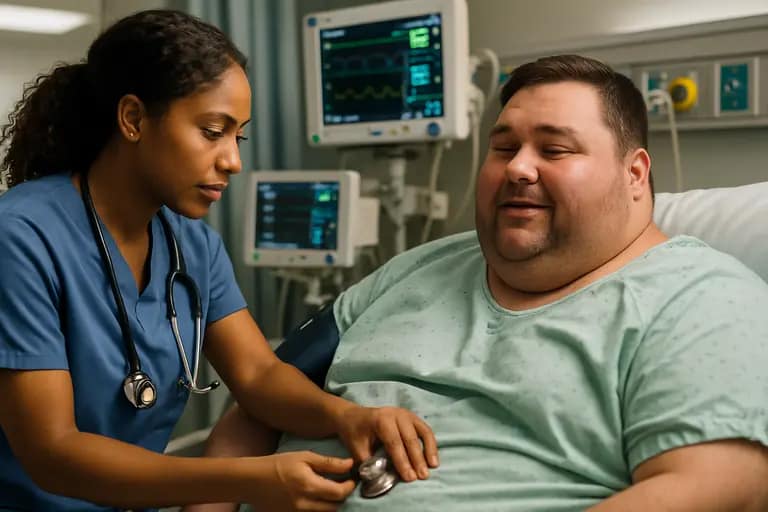
Remote Monitoring May Help Detection
Remote monitoring is one approach studied as a support for earlier discharge. A 2026 meta-analysis of six observational studies involving 1,581 patients looked at day-of-surgery discharge supported by remote monitoring. The pooled readmission rate was 3.35%, with subgroup readmissions reported at about 2.66% for sleeve gastrectomy and 5.28% for Roux-en-Y gastric bypass. The overall complication rate was 3.80%, and major complications were 1.58%.
Those figures may sound reassuring in some settings, but they should not be interpreted as proof that remote monitoring removes risk. The Netherlands Healthdot remote monitoring program, conducted from March 2022 through March 2025 with about 679 patients, found no consistent predictive trends for complications. That suggests remote monitoring may help detect some problems earlier, while not necessarily predicting or reducing every complication.
Home Conditions Can Shape Safety
The home environment may affect whether an early discharge plan is realistic. A patient who lives close to the surgical center, has a reliable support person, can reach the team after hours, and can return quickly if symptoms arise may have a different risk profile than someone who lives far away or has limited support. This is one reason research findings from one center may not translate neatly to another.
Hydration is a recurring concern in the research notes. The MBSAQIP analysis from 2016 through 2021 reported higher odds of dehydration requiring treatment among patients discharged on the day of surgery compared with overnight admission. After bariatric surgery, early drinking tolerance may vary, and nausea or discomfort may make fluid intake difficult. Any concern about fluids, pain, vomiting, fever, shortness of breath, chest symptoms, fainting, or worsening abdominal pain should be discussed with the surgical team according to the discharge instructions provided by that team.
Same-Day Discharge Questions For Your Clinician
Same-Day Discharge may be reasonable for select patients in certain programs, but the recent evidence suggests the decision should be individualized. The safest plan for one person may not be the safest plan for another, especially when comparing sleeve gastrectomy with Roux-en-Y gastric bypass or comparing low-risk and high-risk surgical candidates.
Before surgery, consider asking the bariatric team clear questions that connect the research to your own situation:
- Which discharge criteria must be met before leaving on the day of surgery?
- How does my planned procedure affect short-term readmission, leak, dehydration, or complication risk?
- Would overnight observation change my risk profile based on my health history?
- What symptoms should prompt an urgent call or return to the hospital?
- Who is available after hours if nausea, pain, poor fluid intake, or breathing symptoms develop?
- Is remote monitoring used, and what does it track?
These questions are not a substitute for professional care, but they may support a more informed conversation. Discuss discharge timing, procedure-specific risk, follow-up access, and home support with your bariatric surgeon and clinical team before deciding whether an early discharge pathway fits your circumstances.