Obesity affects a staggering number of people in the United States. Over 98.7 million residents live with this condition, a figure that has grown over decades.
This makes it a serious global health challenge. For many, bariatric surgery offers a safe and lasting treatment path.
The most common weight loss surgery performed today is the laparoscopic sleeve gastrectomy. This guide provides a clear, step-by-step look at this operation.
We will cover who is a good candidate, the precise surgical steps involved, and what patients can expect during recovery. Our goal is to give you a complete understanding of the process, benefits, and important considerations.
Understanding Sleeve Gastrectomy: A Primary Weight Loss Surgery
Medical history shows that the first sleeve gastrectomy was performed in 1990. It was not a standalone cure but an initial phase in a two-part plan. This first stage was part of a more complex bariatric surgery known as BPD-DS.
It aimed to help patients with super obesity lose weight safely before a second operation. By 1999, surgeons performed the first laparoscopic version. They soon noticed excellent results, making it a primary treatment on its own.
A laparoscopic sleeve gastrectomy is a restrictive operation. About 80% of the stomach is surgically removed. What remains is a narrow, tube-shaped pouch often compared to a banana.
This new pouch runs along the lesser curvature of the original organ. The resection line is created using a surgical stapler.
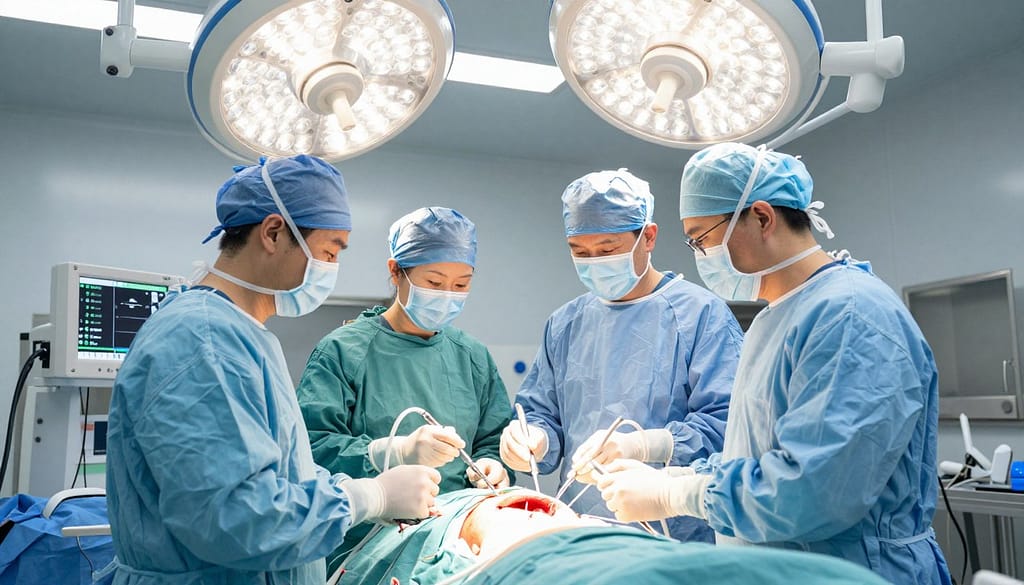
The laparoscopic sleeve approach is now the standard. Surgeons make a few small incisions in the abdomen. A tiny camera and instruments are used to perform the entire procedure.
This method minimizes pain after the operation. It also significantly speeds up a patient’s recovery time compared to open surgery.
A key difference from gastric bypass is what it does not do. This operation does not reroute or reconnect the intestines. That simplification lowers the risk of long-term nutritional shortages.
The mechanism for weight loss is twofold. First, the smaller stomach pouch physically restricts food intake. Second, and crucially, a major hormonal change occurs.
The part of the stomach removed (the fundus) produces most of the body’s ghrelin. This is known as the “hunger hormone.” With its source gone, patients often experience a natural reduction in appetite.
Data supporting this method is robust. Studies show patients can lose 50% to 70% of their excess weight. This loss is sustained over many years.
The operation also powerfully addresses health issues linked to severe obesity. High rates of improvement are seen for type 2 diabetes, high blood pressure, and sleep apnea. Many patients see these conditions resolve completely.
Its rise to a top choice is due to this strong evidence. The technique is also considered more straightforward than other options. This contributes to its widespread use and a lower rate of early complications.
Understanding these fundamentals of the sleeve gastrectomy provides a solid foundation. Next, we can explore who is an ideal candidate for this transformative path.
Who is a Candidate for Sleeve Gastrectomy?
Eligibility for a sleeve gastrectomy hinges on a combination of body mass index, overall health status, and past weight loss efforts. Medical teams use specific guidelines to identify who will benefit most from this bariatric surgery. The goal is to ensure safety and long-term success for every individual.
Standard BMI and Health Criteria
Body Mass Index is the primary starting point for evaluation. The classic criteria are well-established in medical practice.
A person with a BMI of 40 or higher typically qualifies. Someone with a BMI of 35 or higher also qualifies if they have a serious health condition linked to obesity.
These conditions include type 2 diabetes, high blood pressure, or severe joint problems. Patients must show they have tried other weight loss methods without lasting success.
This includes structured diet plans, exercise programs, and behavior therapy. A full health review by a team of experts is mandatory before approval.
This team includes a doctor, a dietitian, and a mental health counselor. Their job is to confirm a patient is physically and emotionally ready for the changes ahead.
Recent updates have expanded these guidelines for certain metabolic conditions. Individuals with a BMI between 30 and 34.9 may now be considered.
This applies if they have uncontrolled type 2 diabetes or metabolic syndrome. It highlights the operation’s powerful effect on improving health beyond just weight loss.
| Criteria Type | Body Mass Index (BMI) | Health Conditions Required | Additional Requirements |
|---|---|---|---|
| Classic Eligibility | ≥ 40, or ≥ 35 with comorbidity | Hypertension, Diabetes, Severe Sleep Apnea, etc. | Documented non-surgical weight loss attempts; mental health clearance. |
| Updated & Expanded | 30 – 34.9 | Uncontrolled Type 2 Diabetes or Metabolic Syndrome | Comprehensive endocrine evaluation; strong commitment to lifestyle change. |
Important Contraindications to Consider
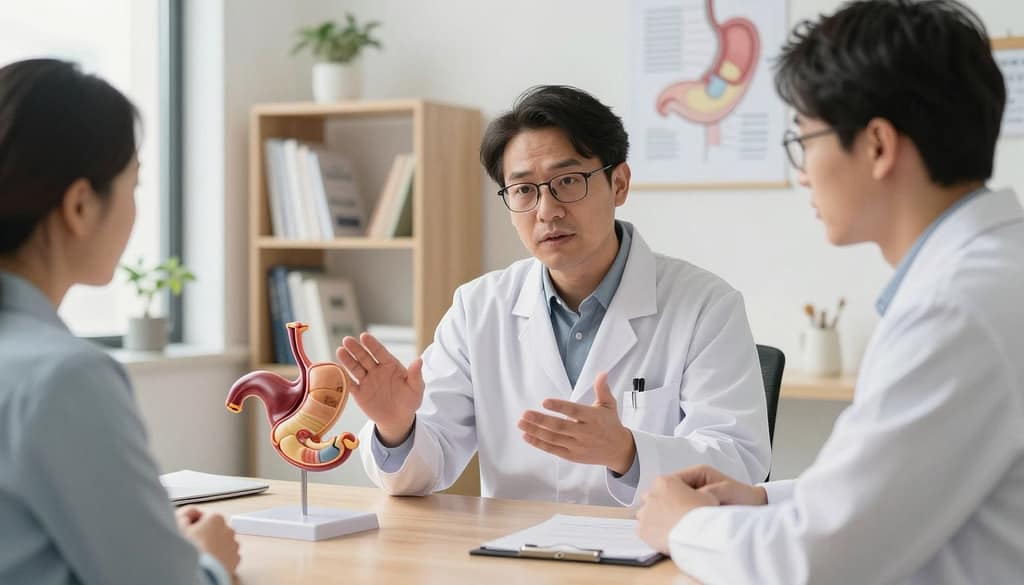
Not every person is a suitable candidate, even if their BMI is high. Certain medical conditions create too much risk and rule out the operation.
These are called absolute contraindications. The inability to safely undergo general anesthesia is a primary example.
An uncorrectable bleeding disorder is another. Active and severe psychiatric illness is also a major concern.
These conditions must be stable and well-managed before surgery can be an option. There are also relative contraindications to weigh carefully.
These are situations where the operation might still be possible, but with extra caution. Severe gastroesophageal reflux disease is a key example.
The laparoscopic sleeve gastrectomy can sometimes make reflux symptoms worse. The presence of Barrett’s esophagus requires special consideration.
A large hiatal hernia is another common factor. Surgeons often repair this during the same operation.
Selecting the right candidate is a careful balance. Doctors weigh the potential for life-changing benefits against each person’s unique risks.
This ensures the laparoscopic sleeve approach is offered to those most likely to succeed.
The Surgical Team and Essential Operating Room Equipment
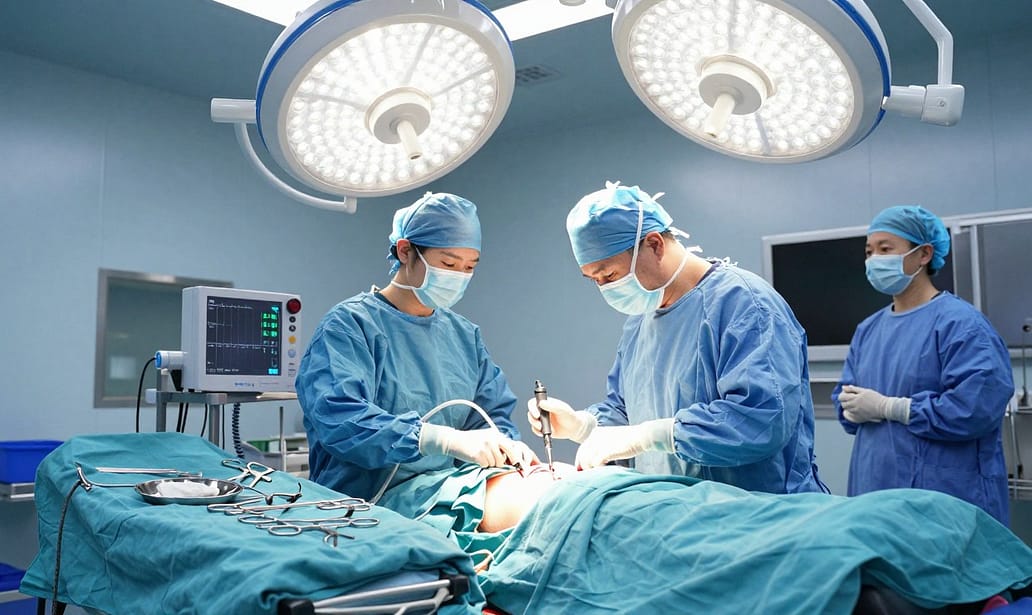
Behind every smooth and safe laparoscopic gastric resection is a choreographed effort between people and precision tools. This sleeve gastrectomy relies on a specialized team and advanced technology to ensure patient safety and optimal results.
The operation is a prime example of modern collaborative medicine. Success depends on flawless execution from every member in the room.
Key Personnel for a Successful Procedure
A successful outcome is a group achievement. The core team functions like a well-rehearsed unit, with each expert playing a vital role.
The team is led by an experienced metabolic or bariatric surgery specialist. This lead surgeon directs the operation and makes critical decisions.
They are supported by a skilled first assistant. This surgeon or fellow helps with exposure and instrument handling.
The scrub nurse anticipates the need for every tool. They manage the flow of specialized instruments to the sterile field.
Finally, the anesthesiologist is crucial. They manage anesthesia tailored for patients with obesity, ensuring stable vital signs throughout.
This coordinated group is part of a broader care team involved in a patient‘s entire journey, from planning to recovery.
Specialized Laparoscopic Tools and Staplers
The technology in the operating room is designed for minimal invasion and maximum control. Advanced laparoscopic towers provide crystal-clear, high-definition video.
Carbon dioxide is gently pumped in to create a safe working space. This is a key part of the laparoscopic approach.
Specialized port placement is the first critical technique. Surgeons use four or five access points, called trocars.
These trocars are longer than standard ones. They accommodate the thicker abdominal wall common in this surgery.
One port is larger, usually 12mm or 15mm. This allows the main instrument, the stapler, to pass through.
A liver retractor is essential. It is placed under the rib cage to lift the left lobe of the liver.
This movement exposes the upper stomach clearly. It gives the surgeon an unobstructed view for the entire operation.
The cornerstone instrument is the endoscopic linear stapler. It fires multiple rows of staples to cut and seal the stomach tissue simultaneously.
Surgeons select different cartridge heights (like black, green, or purple) based on stomach thickness. This choice is vital for a strong staple line.
A calibrated tube called a bougie is inserted orally. It acts as a guide during stapling to create a uniform gastric sleeve.
Additional tools include graspers, energy devices for sealing vessels, and sometimes a flexible camera. This camera can check the inside of the new staple line for integrity.
The surgeon’s expertise in positioning ports and manipulating these tools directly impacts safety. Mastery of these techniques defines a successful gastric resection.
Preoperative Preparation: From Evaluation to Operating Table
Patients embarking on this transformative path undergo a detailed series of evaluations and preparations in the weeks leading up to their surgery date. This phase is critical for ensuring safety and setting the stage for a smooth operation and recovery.
The goal is to optimize the individual’s health and reduce any surgical risks. Every step is carefully planned by the medical team.
Multidisciplinary Assessment and Tests
A complete health evaluation is the first priority. This involves several specialists working together to create a full picture of the patient’s readiness.
One key component is a mandatory upper endoscopy. This test looks inside the stomach and esophagus.
It checks for issues like a hiatal hernia, ulcers, or Barrett’s esophagus. Finding these problems early can change the surgical plan or timing.
Medical clearance assesses heart, lung, and metabolic function. A psychological evaluation is also standard.
This ensures the person understands the lifelong commitment to diet and lifestyle changes after bariatric surgery. It confirms they have a strong support system in place.
Nutritional preparation starts several weeks before the operation. Evidence strongly supports a special “ultra-low” carbohydrate or very low-calorie diet.
This diet is designed to shrink the size and volume of the liver. A smaller liver gives the surgeon much better access to the upper stomach during the laparoscopic sleeve gastrectomy.
Following this diet strictly can make the actual operation safer and faster. Patients typically stay on this plan for two to four weeks.
| Assessment Type | Primary Purpose | Typical Timing |
|---|---|---|
| Upper Endoscopy (EGD) | Visualize stomach anatomy; rule out contraindications like large hiatal hernia or severe gastritis. | 1-3 months before surgery |
| Medical Clearance | Evaluate cardiac, pulmonary, and endocrine health to ensure safe anesthesia and recovery. | 1-2 months before surgery |
| Psychological Evaluation | Assess emotional readiness, understanding of procedure, and post-operative support network. | 1-2 months before surgery |
| Liver-Reduction Diet | Decrease liver fat and size to improve surgical exposure and reduce technical difficulty. | 2-4 weeks before surgery |
Patient Positioning and Operating Room Setup
The final preparations happen on the day of the operation. These protocols are focused on preventing infection and blood clots.
Patients receive specific intravenous antibiotics before the incision. They also get medication to prevent venous thromboembolism (VTE).
This is a critical safety step given the increased risk associated with obesity. Hair at the incision sites is removed with clippers, not razors, to minimize skin irritation.
After the patient is under general anesthesia, the team inserts an orogastric tube. This tube decompresses the stomach, making it easier and safer to handle during the laparoscopic sleeve approach.
Correct position on the operating table is vital. The individual is secured in a supine position (lying on their back).
Both arms are usually extended on armboards. The body is firmly strapped to the table.
This secure strapping allows the table to be tilted safely once the operation begins. After port placement, the table is often shifted into a reverse Trendelenburg position.
This means the head is raised higher than the feet. Gravity helps move other organs away, giving the surgeon an excellent view of the upper abdomen.
The surgical team then arranges the video monitors, instrument tables, and equipment. For optimal ergonomics, the lead surgeon frequently stands between the patient’s legs.
This meticulous setup creates an efficient and controlled environment. It allows the team to focus entirely on performing a safe and precise operation.
Anatomy of the Stomach: A Surgical Roadmap
Before the first incision is made, surgeons must visualize the stomach not as a single organ, but as a collection of distinct regions and blood vessels. This detailed anatomical map is crucial for a safe laparoscopic sleeve gastrectomy. Precision here guides every move during the dissection.
Key Regions: Fundus, Body, Antrum, and Pylorus
The stomach has several zones. The cardia is just past the esophageal junction.
The dome-shaped fundus sits against the diaphragm. The main body holds food.
The antrum grinds it, leading to the pylorus. This sphincter controls entry into the small intestine. The lesser curvature has a notch called the incisura angularis.
Critical Blood Supply and Supporting Ligaments
The lesser curvature gets its blood from the left gastric artery. This vessel must be kept safe to nourish the new gastric sleeve.
The greater curvature is attached by ligaments. The gastrocolic omentum connects to the colon.
The gastrosplenic ligament runs to the spleen. These contain key arteries that are carefully sealed.
Mobilizing this side gives the surgeon access. Protecting the blood flow to the remaining stomach wall is the ultimate goal.